
A practical guide to currency exchange, card payments, transportation, and dining that will save you up to 20% of your budget in Dubai.
You’re at Dubai Airport. You exchange $500 and immediately lose about $25 due to a rip-off exchange rate. At a restaurant, you pay by card and lose another 7% thanks to sneaky “double conversion.” Over the course of a day, these small losses add up to the cost of a great dinner or a ticket to an observation deck. Dubai punishes not for indulging in luxury but for carelessness.
No, we’re not here to teach you to deny yourself everything. On the contrary: this guide is all about freeing up money for real pleasures by stopping you from paying the “inattention tax.” We’ll walk through all the tourist traps together and learn how to avoid them so that the dirhams you save end up in your experience bank rather than in the pockets of cunning money changers.
Top 5 rules of financial hygiene in Dubai:
1. Currency: Bring US dollars (USD) and exchange them only at city exchange bureaus.
2. Cards: When paying, always choose the local currency (AED), not rubles or euros.
3. Transportation: Use the metro for long-distance travel between districts.
4. Tips: Before leaving a tip, check the bill for a 'Service Charge' line.
5. Shopping: Claim Tax Free on purchases over 250 AED.
Step 1: Before you fly-laying the foundation for savings
Proper preparation at home is 50% of success. A few decisions made before your trip can save you the largest portion of your budget.
Where to stay so your wallet says thank you?
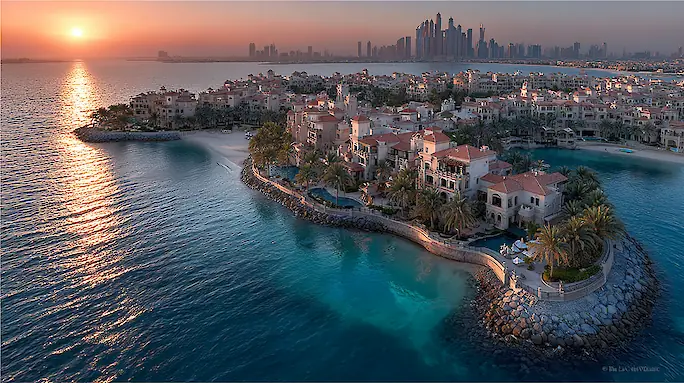
Although Dubai is known for its luxury hotels, there are options for every budget. The Deira and Bur Dubai areas are famous not only for their authentic atmosphere but also for more affordable accommodation and food. This is where you can find budget hotels and hostels. For scale: a night in a simple yet clean hotel in authentic Deira might cost you 70–100 dirhams. For the same money, in the Dubai Marina area, you’d barely buy two cocktails. And one night in a luxury hotel on Palm Jumeirah (from 700 dirhams and up) could cost as much as a whole week’s stay in the old town. The choice is yours!
How not to pay twice for leisure: the magic of online booking
The main rule for safety and savings when planning leisure activities is to book all services through official websites, hotels, or trusted online aggregators. This is often cheaper than buying tickets on the spot (especially for popular attractions like the Burj Khalifa) and protects you from fake tourist services that street “helpers” may try to push on you.
Dollars, euros, or rubles? Which currency will save you money in Dubai?
The official currency of the UAE is the dirham (AED), whose exchange rate is firmly pegged to the US dollar at roughly 3.67 AED per 1 USD. This stability makes the dollar the most predictable and advantageous currency to bring into the country and exchange later.
Step 2: The first hours in Dubai-avoiding traps upon arrival
The most frustrating overpayments happen in the first few hours due to fatigue and lack of information. Let’s close those gaps.
Currency exchange: a ranking of places from worst to best
Where you exchange your dollars is the first and most crucial financial decision in Dubai. A mistake here could cost you a decent restaurant dinner. When exchanging $1,000, the difference between the worst and best options can be nearly 100 dirhams ($27).
- Your hotel. The worst place to exchange currency in the entire emirate. The rates here are designed for very tired or very lazy tourists. Just forget this option exists. Never. Under any circumstances.
- The airport. The exchange rate here is always lower, causing you to lose 2–5% of your amount. Only exchange the bare minimum here ($50–100 USD) for a taxi and initial expenses to get to your hotel safely.
- A bank branch. The exchange rate is good, but be prepared for possible percentage-based commissions and additional fees, making this option less predictable for smaller amounts.
- A licensed exchange bureau in the city. Bingo! This is your best choice. Here you’ll find the most favorable exchange rate and minimal fixed commission per transaction (usually around 3 AED). Look for signs for Al Ansari Exchange, Al Fardan Exchange, or UAE Exchange.
Transportation from the airport: metro vs. taxi
Dubai’s metro is clean, futuristic, and—most importantly for us, incredibly cheap. Stations are located right in the airport terminals, making it the most budget-friendly way to reach many parts of the city, especially if you’re traveling light. You’ll need a Nol transport card to pay, which you can buy right there. Taxis are certainly more convenient if you have a lot of luggage, but they’re also significantly more expensive.
Bank cards and the main trap at the terminal
Bank cards from international networks such as Visa, Mastercard, and UnionPay are accepted almost everywhere in Dubai. However, remember that withdrawing cash from an ATM with a foreign card almost always incurs a double fee: one from the local bank (usually 10–15 AED), and the second from your issuing bank.
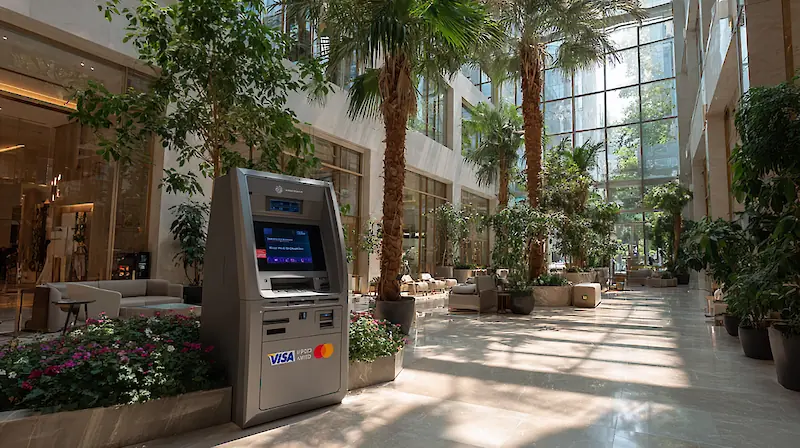
Beware: double currency conversion (DCC): When the payment terminal offers to charge you in your home currency (rubles, euros)-always refuse! This is a trap that will cost you 3–7% of the amount due to the merchant bank’s exploitative exchange rate. Always choose to pay in the local currency-dirhams (AED).
Step 3: City
Life-reducing daily expenses
The bulk of your budget goes toward food and getting around the city. This is where the biggest opportunities lie for smart savings without sacrificing quality.
How to conquer the city by metro and when a taxi makes sense
The Nol Silver card is your key to Dubai’s public transportation system (metro, buses, tram). It costs 25 AED, of which 19 AED are immediately credited to your balance. The cost of a ride depends on the number of zones you cross: 3 AED within a single zone, 5 AED for two zones, and 7.5 AED for three or more zones.
Just think about it: a ride on the popular Dubai Mall–Dubai Marina route (about 20 km) by metro will cost you just 5 dirhams. The same distance by taxi will cost you 60–80 dirhams. That’s more than a 10-fold difference! So the rule is simple: use the metro for long-distance travel between districts. Leave taxis for short trips “from the station to the hotel” or when your legs just won’t carry you anymore.
Gastronomic Dubai for budget travelers
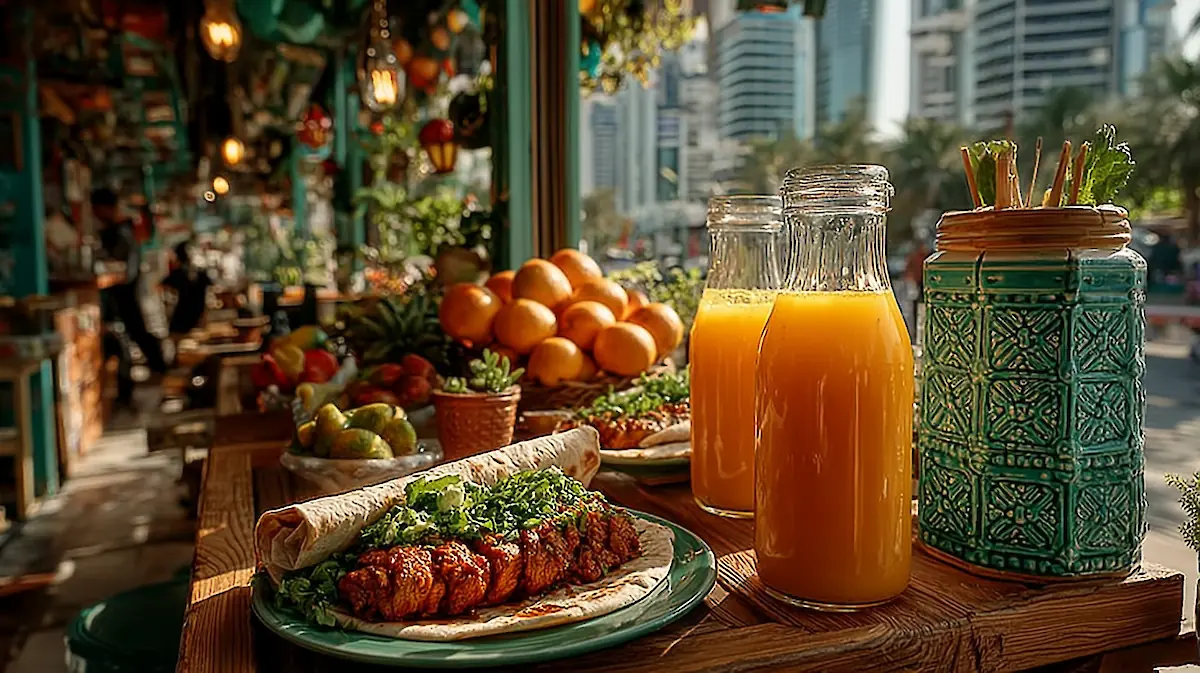
To eat well in Dubai without breaking the bank, just remember a few life hacks. Your best friend will be supermarkets like Union Coop or Lulu. Forget about expensive kiosks near attractions: this is where locals buy water, fresh fruit, and ready-made food (great salads, hummus, hot dishes), saving 2–3 times.
Want true authenticity? Head to the Deira and Bur Dubai areas and dive into any unassuming-looking “cafeteria.” There, for 20–35 dirhams, you’ll be served a huge portion of flavorful biryani or kebab, a taste you won’t forget.
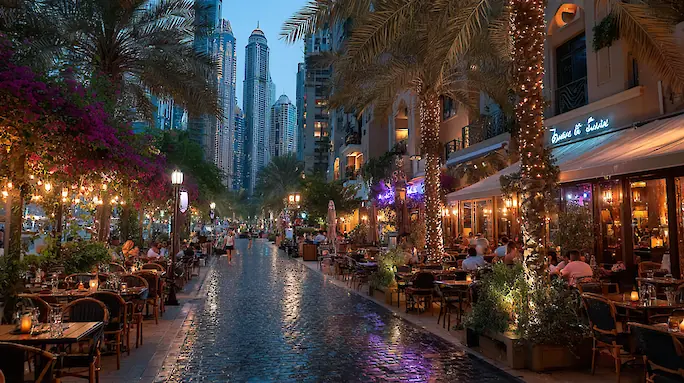
Traveling on weekdays? Dubai works too! From around 12:00 to 15:00, look for “Business Lunch” signs in mid-range restaurants—this is your chance to enjoy a full restaurant-quality meal at fast-food prices (30–60 AED). In the evening, usually from 17:00 to 20:00, catch “Happy Hours” in bars to get discounts on drinks and snacks.

Step 4: Shopping, entertainment, and tips-spending wisely
You can and should enjoy shopping and leisure activities; the key is knowing a few local rules.
The art of bargaining in the markets
Bargaining is an integral part of the culture, but it’s important to know where it’s appropriate. In shops and malls with fixed prices, you can forget about bargaining. But in traditional markets (souks)—the Gold Souk, Spice Souk, Textile Souk—it’s a must.
The main rule of bargaining: it’s a performance, not a battle. Start with a broad smile and respect. When you hear a price, shake your head in mock surprise but with a friendly tone, then name your own—about half the asking price. That’s when the fun begins. Your goal is to meet somewhere in the middle. Reducing the price by 20–30% is already a great result and a sign of mutual respect.
Secrets of restaurant bills and tips
Tipping in Dubai is not mandatory but expected for good service. The main mistake tourists make is leaving standard tips of 10–15% without checking the bill. In most cases, taxes and a service charge are already included in the bill. For a taxi driver, rounding up the fare or adding 5–10 AED is sufficient, and for a hotel porter, 10–20 AED is enough.
Attention, 'service charge'!: Before leaving a tip, carefully review the bill. If it already includes 'Service Charge' (10%) and 'Municipality Fee,' the service is already covered. Additional tips are entirely a gesture of goodwill, and a small amount of 5–10 AED is usually enough.
How to get a tax refund on purchases: your final quest
Getting a tax refund (Tax Free) is your final quest in Dubai, bringing a pleasant monetary bonus. Here’s how to complete it:
Step 1: In the store. After making a purchase worth at least 250 dirhams, don’t rush off. Ask the cashier to process your Tax Free refund (you’ll need your passport); a digital stamp will be attached to the receipt.
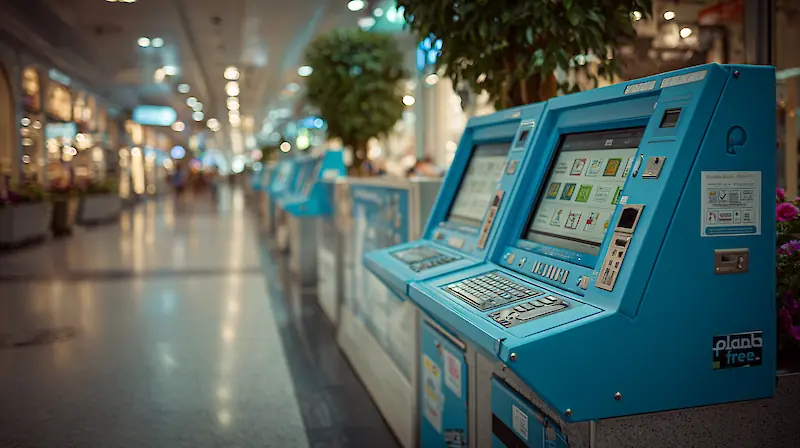
Step 2: At the airport (before checking in your luggage!). Your goal is the blue Planet Tax Free kiosk. Scan your passport, then scan the barcodes on your receipts. Be prepared to show your purchases to customs officers—keep your items handy.
Step 3: Receiving your reward (after passport control). Find the Planet Tax Free office and choose how to receive your money: in cash (if the amount is under 7,000 AED) or via a bank transfer. Quest completed!
Experiences that don’t cost a dirham
- The mesmerizing fountain show at the base of the Burj Khalifa.
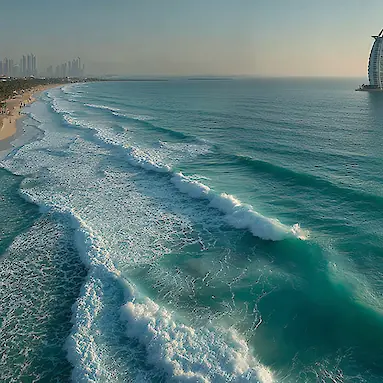
- Relaxing and taking photos at the famous public beaches Jumeirah Public Beach and Kite Beach.
- Strolling through the colorful, spice-filled labyrinths of the Spice and Gold Souks in the Deira area.
Financial security and useful contacts
Dubai is one of the safest cities in the world, but basic precautions can help you avoid trouble. Beware of phishing SMS messages about alleged unpaid fines that lead to fake websites designed to steal your card details. Also, never buy excursions or tours from street hustlers, always use official booking channels.
Important emergency phone numbers: Write down or save in your phone:
Police: 999
Ambulance: 998
Tourist police (non-emergency inquiries): 901
Also, find out your bank’s international hotline number in advance for blocking your card.
Dubai on your terms
Saving money in Dubai isn’t about giving up luxury-it’s about avoiding the “inattention tax.” Every overpayment you avoid isn’t just money saved; it’s an opportunity to gain more experiences: instead of overpaying for a taxi, you can afford a nice dinner; instead of losing money on currency exchange, you can buy a ticket for a desert safari. Travel smart!
Ten commandments for a smart tourist in Dubai:
- Honor the dollar, for it is the best currency for exchange in the city.
- Don’t fall for conversion to rubles at the terminal; always choose dirhams (AED).
- Praise the metro for long-distance travel, and leave taxis for short trips.
- Don’t pass by authentic cafés in Deira, for they offer both flavor and savings.
- Love the supermarket (Lulu or Union Coop), for water and snacks are three times cheaper there.
- Enjoy free gifts: the fountain shows, beaches, and the vibrant markets.
- Bargain with a smile in the markets, but know your limits in the malls.
- Check your bill to avoid paying tips twice because of the “service charge.”
- Collect receipts from 250 dirhams and complete the “Tax Free” quest at the airport.
- Don’t trust SMS about fines or street tour vendors.
Prices and conditions are current at the time of writing and may change. We recommend verifying information on official websites before your trip.


















Comments