
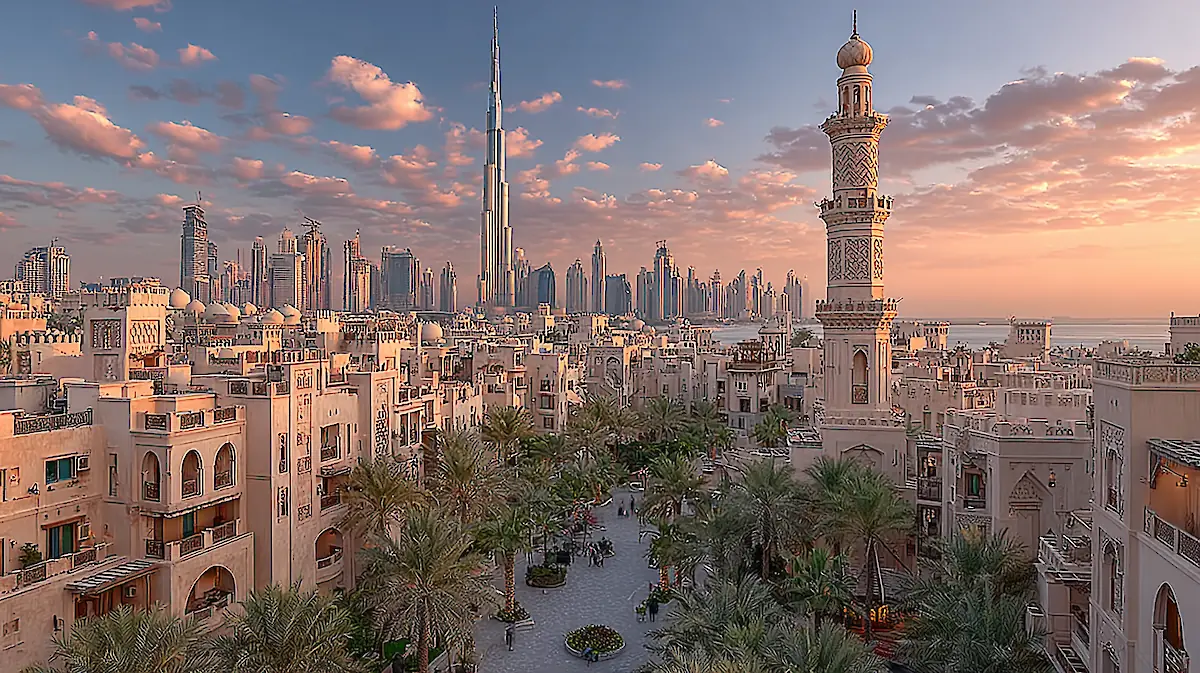
How to visit the emirate’s main holy sites with respect and gain unforgettable experiences: dress code, etiquette, and practical tips.
Five times a day, Dubai pauses for a moment. Above the roar of supercars and the whispers of shopping malls, the adhan rises - a call to prayer. This ancient sound, echoing off the glass and steel of skyscrapers, serves as a reminder of the city’s invisible “operating system.” For a traveler accustomed to Dubai as a showcase of luxury, visiting a mosque offers a chance to peek into its “engine room,” to see what drives the heart of this megacity. This is not just a tour; it is an invitation to engage in a dialogue with the soul of the city. This article is your friendly and reliable guide, helping you confidently and respectfully discover Dubai’s architectural and spiritual treasures, transforming an ordinary tourist visit into an unforgettable cultural experience.
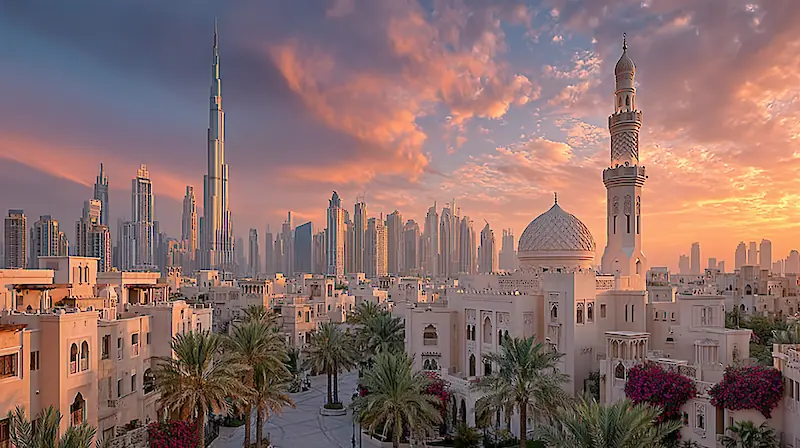
Which mosques in Dubai are open to everyone
It is important to know that not all mosques in Dubai are open to non-Muslim visitors. However, several magnificent holy sites warmly welcome visitors, offering various ways to experience Islamic culture. We have selected three iconic locations: the most famous and focused on cultural dialogue, the largest and architecturally impressive, and the most atmospheric, located in the historical heart of the city.
Jumeirah mosque — the best choice for a first encounter and dialogue
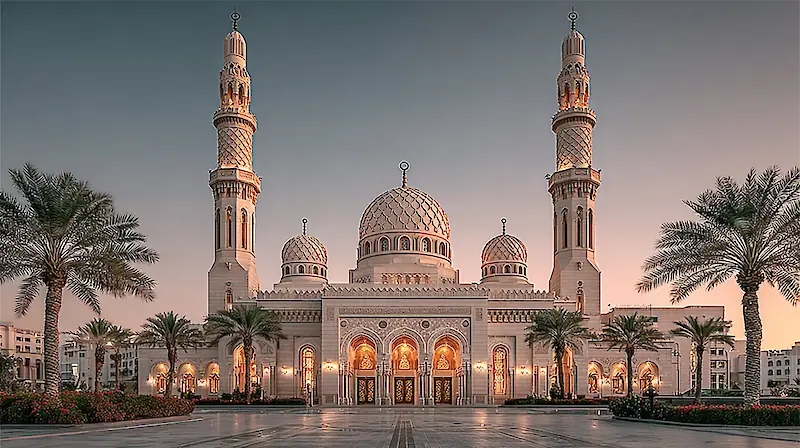
Jumeirah Mosque is often called the "postcard mosque", and with good reason. Its cream-colored walls made of carved stone, two elegant minarets, and the majestic central dome look especially magical in the rays of the setting sun. But Jumeirah's true treasure lies inside. It is here that the Sheikh Mohammed Centre for Cultural Understanding (SMCCU) runs its renowned "Open Doors, Open Minds" program. Forget monotonous guide lectures—what awaits you is a lively, honest, and often humor-filled conversation where you can ask absolutely any question about Islam and the traditions of the UAE. This is the best way to dispel stereotypes and understand the local culture from within.
Practical information: The mosque is located on Jumeirah Beach Road. Tours are held from Saturday to Thursday at 10:00 a.m. and 2:00 p.m. It is advisable to register in advance on the SMCCU website.
Al-Farooq Omar bin Al-Khattab mosque — architectural grandeur and independent exploration
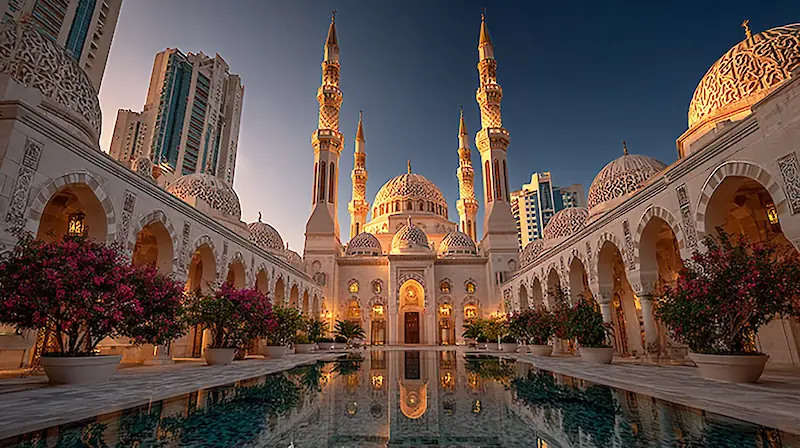
If Jumeirah represents elegance, then Al-Farooq embodies power and scale. It is often referred to as the “Blue Mosque of Dubai,” and the resemblance to the Istanbul masterpiece is truly striking. Imagine: you step into the inner courtyard, and above you, a cascade of twenty-one domes rises skyward, while four slender minarets tower at the corners. Inside, you are greeted by a grand prayer hall bathed in light that filters through intricate stained-glass windows. There are no organized tours here, and that is part of its unique charm. You can wander in complete silence through the carpeted halls, admire the elaborate calligraphy, and feel the hustle and bustle of the metropolis fade away far beyond the walls.
Practical information: The mosque is located in the Oud Metha area. Admission is free and open from 9:00 a.m. to 10:00 p.m., except during prayer times. Appropriate attire can be rented at the entrance if needed.
The Grand mosque — a journey to the historic heart of Dubai
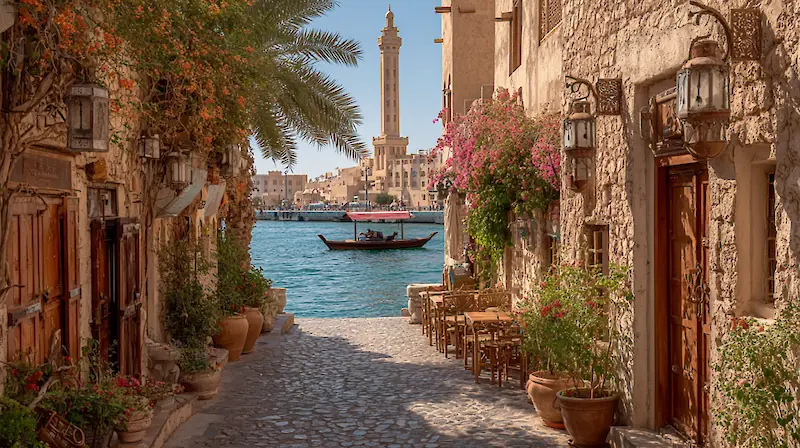
To truly hear the pulse of Old Dubai, head to the Grand Mosque in the Al Ras district. Its towering minaret serves as a beacon amid the labyrinth of streets in the Textile Souk and the bustling activity along the Dubai Creek waterfront. Here, there is no glitz of the new districts, but rather an authentic, living essence. Visiting this mosque is not a standalone event but a natural part of your stroll: after inhaling the aroma of spices from the neighboring market and hearing the calls of the merchants, you step into a haven of tranquility and coolness to see how faith is woven into the very fabric of the city’s everyday life. It’s a perfect immersion into history, where spirituality and commerce have coexisted side by side for centuries.
Practical Information: The mosque is located in the Al Ras district of Deira. It is open for visits from 9:00 a.m. to 9:00 p.m., except during prayer times. Your visit can easily be combined with exploring other attractions in the Old Town.
Your visit to the mosque: A primer on respect
Don’t worry—visiting a mosque is straightforward, intuitive, and rooted in a universal principle: respect. It’s not a strict test; rather, it involves a few simple gestures of courtesy that demonstrate your openness and make the visit pleasant for everyone. Let’s go through them one by one.
How to dress for a mosque visit: Dress code for men and women
For women: Modest, loose-fitting, and non-transparent clothing is required, covering the arms down to the wrists and the legs down to the ankles. The head must be covered with a scarf (shayla). Tight-fitting clothing, such as skinny jeans or leggings, is not appropriate, even if it is long.
For men: Long trousers that fully cover the legs are mandatory. Shoulders must also be covered—either a shirt or a T-shirt is suitable. Shorts and sleeveless tank tops are strictly prohibited.
Guest glossary: An abaya is an elegant long cloak, and a shayla is a lightweight headscarf. Don’t worry if you don’t have appropriate clothing—you can often rent it for free at the entrance to major mosques.
Rules of conduct inside: Show respect
- Footwear: Always remove your shoes before entering the prayer hall and leave them in the designated area.
- Silence: Maintain silence inside the mosque. If you need to say something, speak in a whisper.
- Food and Drink: Eating, drinking, and smoking are prohibited on the mosque grounds.
- Photography: You may photograph the architecture and interiors, but taking pictures of people praying is strictly forbidden. This is considered a rude intrusion into personal space.
- Religious Items: Do not touch the Quran or other items used for religious services.
- Movement: Follow the routes and areas specifically designated for tourists so as not to disturb worshippers.
Visiting during prayers and in Ramadan
Prayer times: Muslims perform five daily prayers (namaz). During the call to prayer (adhan) and the prayer itself, access for tourists may be temporarily restricted. If you find yourself inside at this time, it’s best to stop, remain completely silent, and respectfully acknowledge this important moment.
The Holy Month of Ramadan: During this period, visiting hours for tourists may be significantly reduced. Be sure to check the current schedule on the official websites of the mosques or tourist centers before your visit.
Not just a tourist, but a guest
As you step out of the cool, light-filled hall of the mosque back onto the sun-drenched streets of Dubai, you’ll hear the adhan in a completely different way. It will no longer sound like just an exotic melody; instead, it will resonate as a familiar and intimate rhythm of the city, its very heartbeat. This is the magic of such a visit. A modest headscarf or long trousers are not shackles—they are your key to engaging in dialogue with another culture. They are the “password” that transforms you from a mere observer into a welcomed guest. In return for this simple gesture of respect, Dubai will open its soul to you—a quiet, wise, and incredibly beautiful soul hidden behind a façade of glass and ambition. It is for this experience, rather than for the photos, that it is truly worth coming here.
Checklist before visiting a mosque: route: Have you chosen a mosque and checked its visiting hours? Clothing: Have you prepared modest attire (long sleeves, trousers/skirt, headscarf for women)? Camera: Is it charged, but remember the ban on photographing worshippers? Mindset: Are you ready to listen, observe, and show respect? Footwear: Can it be easily removed? Excellent, you’re ready!
From the mosque to the city: How to maintain a respectful attitude
The respectful attitude you display in the mosque should be maintained in other public places in Dubai as well. This will help you better understand the local culture and avoid awkward situations.
Key codes of conduct in the city
- Restraint: Public displays of affection, such as kissing or hugging, are not accepted in Dubai. Behave with restraint.
- Photography: Remember that photographing people without their explicit consent is strictly prohibited. This applies especially to women. You should also avoid photographing government buildings and military facilities.
- Alcohol: The consumption of alcohol is permitted only in licensed establishments—bars, restaurants, and clubs located primarily in hotels. Being intoxicated in public places or driving a vehicle after consuming alcohol (a zero-tolerance policy is in effect) is a serious offense.
The Art of Photography in Dubai: The UAE’s cybercrime law takes privacy very seriously. Never photograph or publish images of people without their direct permission. This is not just a matter of good etiquette; it is a legal requirement.
P.S. before you fly: Two critically important points
Before you start planning your visit to the mosques, make sure your trip overall goes smoothly. Here are two rules that apply to any trip to the UAE:
Check your passport!: The most important rule before traveling to the UAE: Make sure your passport is valid for at least 6 months from the date of entry. This is a strict requirement, and failure to comply will result in denial of entry.
Attention: medications!: Be extremely careful when bringing medications into the country. Many drugs that are commonly used in your home country may be prohibited in the UAE. Always carry a doctor’s prescription with you and check the official list of permitted medications on the website of the UAE Ministry of Health and Prevention (MoHAP) in advance to avoid serious consequences.



















Comments