
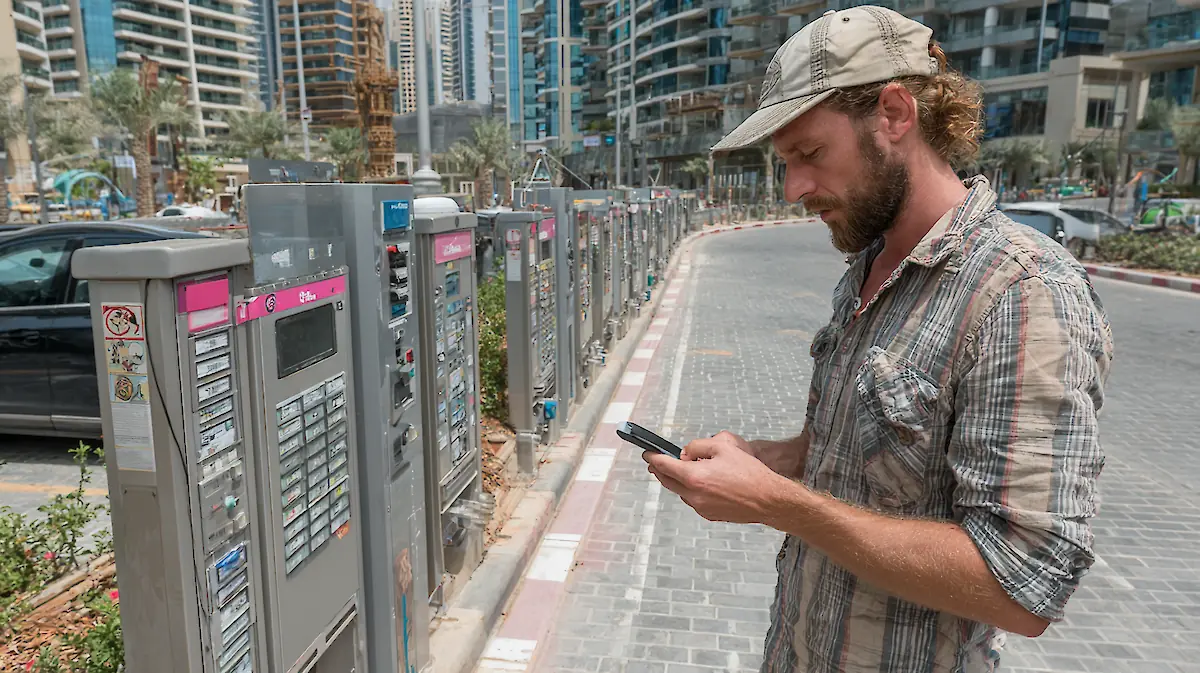
All the secrets of driving in the UAE: from the “buffer +20” rule and Salik toll roads to the unwritten etiquette on highways.
The panorama of Dubai through your windshield is something special. Futuristic skyscrapers scrape the sky, and beneath your wheels lies the perfect asphalt of the eight-lane Sheikh Zayed Highway. Renting a car here means getting the key to the city, gaining true freedom, and having the ability to decide for yourself where to veer off the glossy tourist route. However, behind the gleam of these flawless roads lies a strict and uncompromising system of rules. Ignorance of local regulations can result not only in hefty fines but also in far more serious troubles. This article is your reliable navigator through the world of Dubai’s roads. We’ll guide you through all the key aspects: from picking up the keys to the nuances of parking and how to behave in an emergency. After reading this, you’ll feel just as confident behind the wheel in Dubai as you do at home. Please note: information about fines, parking rates, and rules is current as of the date this article was written. We recommend always checking the latest data on the official websites of the Roads and Transport Authority (RTA) of Dubai and Dubai Police, as these may change.
First step: Getting ready to go
Documents, money, insurance: preparing for rental correctly
To rent a car in Dubai, you’ll need a clear set of documents. Make sure you have the following with you:
- International Driving Permit (IDP)
- National driving license
- Foreign passport with a valid tourist visa
- Credit card in the name of the main driver for the security deposit
However, price is not the only deciding factor. As always, the devil is in the details of the contract. Pay special attention to the insurance terms: basic coverage (CDW) often does not include damage to windows, tires, and the undercarriage, this is critical for desert roads. Be sure to check the daily mileage limits (many companies impose a limit of 200–250 km, which may not be sufficient for a trip to another emirate) and the amount of the administrative fee for processing fines, some charge as much as 100 dirhams per fine!
International driving permit: Although some rental companies may allow you to rent a car using a new-style national driving license, having an IDP is an official requirement of the UAE authorities. This document will serve as your solid proof when dealing with the police or the insurance company in the event of a traffic accident.
Navigation and communication on the roads
Dubai’s perfect roads are crisscrossed by complex interchanges, so you can’t do without a navigation system. The best tools for the job are the Waze app, which provides real-time information on traffic conditions, accidents, and radar locations, and the familiar Google Maps. For their stable operation, a constant internet connection is required, so make sure to purchase a local SIM card or activate an eSIM in advance.
What to do in an emergency (traffic accident)?
Even on the safest roads, incidents can occur. If you are involved in a traffic accident, stay calm and act clearly and according to a plan:
- Immediately stop the vehicle and turn on the hazard lights.
- Do not move the vehicle from the scene of the accident. The exception is minor accidents without injuries that do not obstruct traffic. In such cases, you can use the Dubai Police mobile app to quickly record the incident online.
- Call the police using the single emergency number — 999.
- Wait for an officer to arrive and obtain an official traffic accident report (police report).
- Immediately afterward, contact your rental company and inform them about the incident.
A police report is mandatory!: Never leave the scene of a traffic accident, even if it involves a minor scratch, without obtaining an official police report. Without this document, your insurance will be voided, and you will be responsible for all repair costs, no matter how small they may be.
Highways, speed cameras, and invisible money: Understanding the infrastructure
“Buffer +20”: how to legally exceed the speed limit in Dubai (and where it doesn’t work)
The speed limit system in the UAE has an important feature. On most roads in Dubai and some other emirates, there is a so-called “buffer” or “tolerance” (leeway) of 20 km/h. This means that if a sign indicates a speed limit of 100 km/h, the radar will only trigger at 121 km/h.
- On highways: 100–120 km/h (in practice, you can drive up to 120–140 km/h).
- In the city: 60–80 km/h (in practice, up to 80–100 km/h).
- In residential areas and parking lots: 25–40 km/h (here the “buffer” is often absent).
Critically important: this “tolerance” is completely absent in the Emirate of Abu Dhabi! When entering the capital, radars are set to trigger precisely at the speed indicated by the sign. This is the main trap for inattentive drivers traveling between emirates. Stay vigilant: the roads are dotted with both stationary and mobile radars.
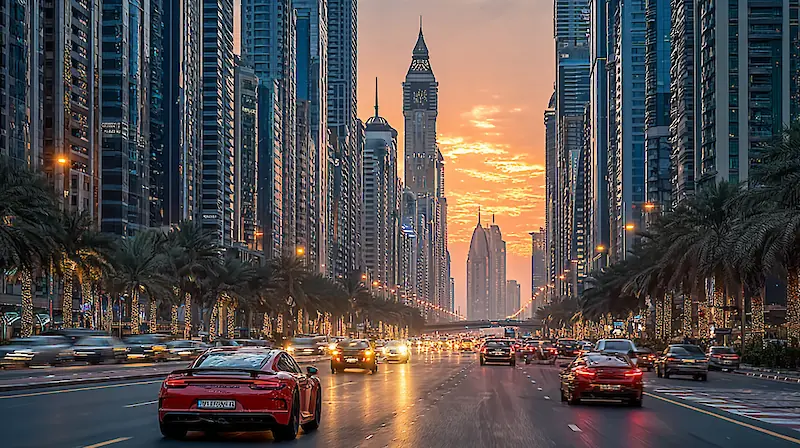
Control system: Dubai operates one of the most advanced traffic monitoring systems in the world. Cameras record not only speed but also running red lights, dangerous lane changes, and phone use. Fines are issued automatically and are entered into the system almost instantly.
The Salik system: invisible tolls on the roads
On Dubai’s expressways, you won’t find conventional toll booths. Instead, an automated toll collection system called Salik is in place. As a tourist, you won’t even notice the payment process: special gantries installed above the road automatically scan the sticker on your car, and the rental company will later simply deduct the total amount from your deposit.
Plan your route: Use navigation apps like Waze or Google Maps, which can display toll roads and suggest alternative routes. Sometimes a small detour can save you a few dirhams, especially if you make multiple trips throughout the day.
Parking in Dubai: from mobile apps to color-coded zones
The parking system in Dubai is well-organized but requires attention. All paid zones are divided into categories (A, B, C, D, etc.), which differ in cost and maximum parking duration. You can pay for parking in several ways:
- Parking meters: Accept coins and issue a ticket that must be placed under the windshield.
- SMS (mParking): A convenient way to pay via mobile phone. Instructions are always available on the parking meter.
- Mobile apps: Official apps such as RTA Dubai or DDA allow you to pay for parking online and extend your parking time remotely.
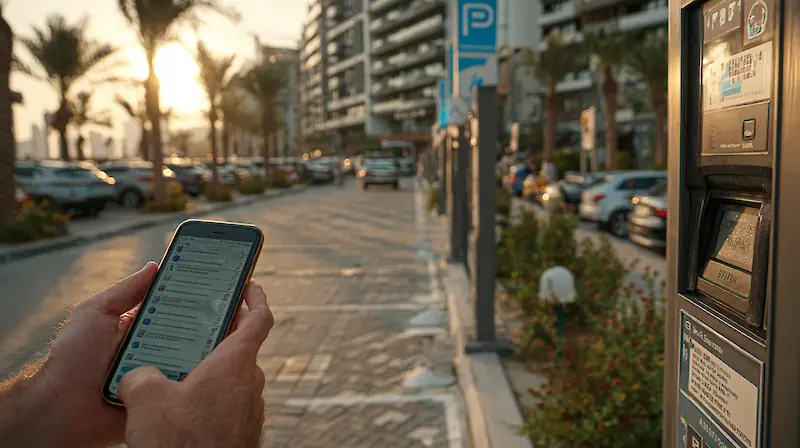
Free parking: A nice bonus: parking in most paid zones in Dubai becomes free on Sundays and on public holidays. Nevertheless, always check the most up-to-date information on the sign at the nearest parking meter or on the RTA website, as rules may differ at certain multi-level and special parking facilities.
Local flavor: What isn’t written in the traffic rules
Roundabouts: the main rule that saves you from fines and accidents
Roundabouts are very common in the UAE, and driving through them follows one iron rule: the driver already on the roundabout always has the right of way. When approaching a roundabout, you must yield to all vehicles coming toward you from the left along the roundabout. Changing lanes within the roundabout is allowed, but it must be done well in advance and with extreme care, ensuring that the maneuver is safe.
Be careful at roundabouts!: Incorrectly navigating a roundabout is one of the most common and dangerous violations among tourists. Be extremely attentive, always reduce your speed, and yield to traffic already moving around the roundabout. This will help you avoid not only a fine but also a serious accident.
Unwritten road etiquette: what isn’t in the traffic code
- Flashing high beams: If a car in the left lane on a highway "catches up" to you and flashes its high beams, this is not an act of aggression. It is a standard and polite request to let them pass, as the left lane is considered the fast lane. Calmly move to the right lane at the first safe opportunity.
- “Tailgating”: Be prepared for the fact that some local drivers—especially those in large SUVs—will literally “tailgate” your car, even if you’re not in the left lane. The key is not to fall for the provocation. Don’t accelerate or brake suddenly. Instead, stay calm, smoothly (!) increase the distance to the vehicle in front of you (which will give you more room to maneuver), and as soon as it’s safe, simply let the impatient driver overtake you.
- School Buses: This is one of the strictest rules. If a school bus has stopped and extended its “Stop” sign with flashing red lights, all vehicles in both directions must come to a complete stop and wait until the sign is retracted. The fine for this violation is among the highest in the country.
“Zero Tolerance”: prohibitions you must not forget
In the UAE, there are absolute prohibitions whose violation is punished with the utmost severity.
- Alcohol: The country enforces a zero-tolerance policy for alcohol while driving (0.0 blood alcohol content). This is no exaggeration. Any, even the slightest, amount of alcohol in a driver’s blood is considered a criminal offense and results in hefty fines, imprisonment, and deportation.
- Aggressive driving: Any aggressive gestures, verbal insults, dangerous cutting-in maneuvers, or deliberately creating hazardous situations on the road are strictly penalized.
- Using a phone: It is prohibited not only to talk on the phone without a hands-free headset, but also simply to hold it in your hand while driving.
Absolute ban on alcohol!: Even if you had a glass of wine in the evening, do not get behind the wheel the next morning. The slightest residual traces of alcohol in the body can lead to catastrophic consequences. In the UAE, this rule has no exceptions.
The fine system: what, where, how much?
Fines in the UAE are no joke. They are truly high and designed to discourage violations once and for all. To give you an idea of the scale, here are some figures for certain serious offenses (amounts may vary, but they provide a general sense):
- Running a red light: a fine starting from 1,000 AED, 12 black points, and possible confiscation of the vehicle for 30 days.
- Significant speeding—more than 60 km/h over the limit: a fine starting from 2,000 AED and black points.
- Driving under the influence: Decided solely by a court. Carries a hefty fine (starting from 20,000 AED), imprisonment, and inevitable deportation.
- Not wearing a seatbelt / Using a phone: starting from 400 AED.
If you receive a fine while driving a rental car, you will most likely be notified by SMS. The rental company will deduct the fine amount from your deposit, adding its own administrative fee for processing the payment.
The final stretch: Move freely, but smartly
So is it worth it? Absolutely. Driving in Dubai is more than just a way to get around, it’s a full-fledged part of the adventure. Perfect highways, well-designed interchanges, and precise navigation systems make driving surprisingly comfortable, even for first-time visitors to this megacity. The key to a successful and safe trip lies in respecting local traffic laws and driving culture. The strict rules aren’t meant to complicate your life as a driver; they’re designed to ensure maximum safety on roads with extremely heavy traffic.
So go ahead, grab the keys! It’s the car that turns your trip from a standard tour into a true exploration: it can whisk you to the Martian landscapes of the Rub’ al Khali desert, take you to swim in the turquoise lakes of the mountain enclave of Hatta, and help you discover that hidden Fujairah beach that no guidebook mentions. The main thing is to drive smartly, with respect, and with your eyes wide open. Safe travels and a tank full of unforgettable experiences!






















Comments