

From the Emirates ID and checkbook to the Ejari contract and choosing the right neighborhood, your trusted roadmap to your dream home. The dream of living in futuristic Dubai, where the sun shines year-round and skyscrapers touch the clouds, is becoming a reality for many. But before you can enjoy the views from your balcony and the boundless opportunities the emirate has to offer, you must take the most important step: finding your home. The rental market in Dubai operates by its own rules, and to a newcomer, it can seem like a minefield: an opaque check-based payment system, ubiquitous agents, and mandatory government registration. Forget about panicking. Instead of hundreds of scattered tips from forums, here you’ll get a single, proven roadmap. Together, we’ll walk through the entire process, from calculating your real budget to the finer points of signing a lease. By the end of this article, you won’t have a jumble of confusing terms in your head, you’ll have a crystal-clear plan. You’ll be ready to take action.
Step 1: How much money do you need? Assembling the tenant’s full “Starting Capital”
Before diving into the beautiful listings on rental portals, let’s take an honest look at the numbers. Renting in Dubai isn’t just about paying for an apartment, it’s a whole set of initial expenses that you need to factor into your budget. Here’s what it consists of:
One-time “entry” fees:
- Security deposit (refundable): Your guarantee to the landlord. Typically, this is 5% of the annual rent for an unfurnished apartment and 10% for a furnished one. This money will be returned to you after you move out, provided the property is in good condition.
- Agency fee: A charge for your saved time and peace of mind. A standard 5% of the annual rental cost.
- Government fees: These are unavoidable. They include registration of the Ejari contract (about 220 AED) and the refundable deposit for connecting water and electricity with DEWA (about 2130 AED). Prices may change, so check the official portals.
- Internet and TV connection: The cost depends on the provider (Du or Etisalat) and the package you choose.
Main and regular payments:
- Annual rent: The key figure in your equation. It is usually divided into several payments (from 1 to 12), which you make using bank cheques dated for a future month.
- Utilities: In addition to bills from DEWA (water and electricity), pay attention to air conditioning. In homes marked “Chiller Free,” these costs are already included in the rent. If you have “District Cooling” (centralized cooling), be prepared for a separate and sometimes substantial bill.
A savings tip known to all locals: When searching for housing, always check the ‘Chiller Free’ box in the filters. This means that the costs of air cooling (a significant part of utilities in Dubai) are already included in the rent. This little life hack can save you hundreds of dirhams every month.
Step 2. Paper barrier: Assembling your “Pass” to the rental world
In Dubai, money goes a long way, but it’s not everything. When it comes to long-term rentals, your main asset isn’t a stack of dirhams; it’s the right set of documents. Without them, you simply won’t be able to sit down at the negotiating table. Let’s put together this “gentleman’s kit” in advance so you don’t stumble at the most crucial stage.
- Emirates ID: Your identity card in the UAE. It’s the key to all government and commercial services, from opening a bank account to signing a lease agreement. You can’t do without it.
- Resident Visa: This is the basis for obtaining an Emirates ID. Before you can sign a year-long lease, you must have a valid resident visa stamped in your passport.
- Bank account in the UAE and checkbook: Rent payments in Dubai are traditionally made via post-dated checks. To issue these checks, you need a checkbook, which can only be obtained from a local bank.
Which comes first: Visa or lease? The classic expat puzzle: This is a vicious cycle that leaves many newcomers stumped. To conclude a year-long rental contract (Ejari), you need an Emirates ID, and to get an Emirates ID, you need a resident visa. Therefore, the procedure is always the same: first, the visa issue is resolved (usually through your employer), and only then does the full-fledged housing search begin.

Step 3. Defining your goals: Apartment or villa?
Choosing between a high-rise with panoramic views and a cozy home with its own garden is one of the first decisions you’ll need to make. Each option has its own pros and cons for living in Dubai.
- Apartments:
- Pros: Breathtaking views, access to shared amenities (the pool and gym are often better than those in expensive fitness clubs), a high level of security, and walking distance to the metro and business centers.
- Cons: Less personal space, potential noise from neighbors, strict community rules (for example, regarding pet ownership or barbecuing on the balcony).
- Who it suits: Single professionals, young couples, and small families who value convenience, a dynamic lifestyle, and don’t want to spend time on household chores.
- Villas/Townhouses:
- Pros: Space where you can truly breathe, a private garden for morning coffee or children’s play, a high level of privacy, and ideal conditions for families with children and pets.
- Cons: Higher maintenance and utility costs (watering the garden, cleaning the pool, electricity), and frequent location in communities far from the city center, where a car is essential.
- Who it’s for: Families with children, pet owners, and anyone willing to trade a 50th-floor view for tranquility, greenery, and their own lawn.
Step 4: The Dream map: Choosing a neighborhood to live in, not just to visit
Dubai is a mosaic of neighborhoods that differ dramatically in character. The location you choose will shape your daily routine, commute time, and the vibe of your weekends.
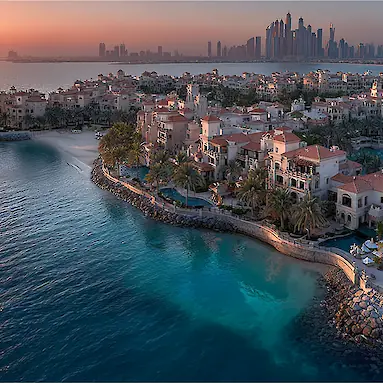
Dubai Marina & JBR – for those who want to live like they’re on vacation
Imagine living among gleaming skyscrapers by canals lined with pristine white yachts. Morning runs along the waterfront, dinners at hundreds of restaurants, and a beach just a five-minute walk away—this is the reality of Marina and JBR. But be prepared: for high prices, a constant flow of tourists, and evening traffic jams. This is the price of living at the epicenter of resort-style energy.
Downtown Dubai – in the heart of the action (and traffic)
Yes, living with a postcard-perfect view of the Burj Khalifa and listening to the fountain show every evening is a reality in Downtown. Here, you truly are at the center of it all: there’s Dubai Mall for shopping, and the Opera House for a cultural evening. It’s ideal if you work in the area. But be prepared for the flip side: endless traffic on the boulevard in the evenings and on weekends, and prices for everything from coffee to dry cleaning that are “capital city”-level.
JLT (Jumeirah Lake Towers) – a smart alternative to Marina
Located just across the road from Dubai Marina, the JLT district offers a similar lifestyle—but at a more affordable price. High-rise clusters here are grouped around artificial lakes with cozy parks and running tracks. This is a more tranquil, community-oriented, and budget-friendly alternative to its glamorous neighbor. Cons: You’ll need to travel to the beach, and navigating between the clusters can be confusing at first.
Arabian Ranches & The Springs – oases for family idyll
If you’re looking for tranquility, greenery, and safety, these gated communities are your choice. Villas and townhouses dominate here, surrounded by parks, golf courses, and playgrounds. It’s an ideal environment for family life, complete with schools and shops. The main trade-off: you’ll be living away from the hustle and bustle of the city, which means you’ll be entirely reliant on a car for trips into the city center.

Tip: Before making a decision, visit the neighborhood you like at different times: during the morning rush hour to assess traffic, and on a weekday evening to experience its real atmosphere rather than its tourist facade.
Step 5: The hunt begins: Portals, agents, and pitfalls
So, you’ve decided on a budget and a neighborhood. It’s time to start the hunt!
- Online portals: Major platforms such as Property Finder, Bayut, and Dubizzle are your starting point. Use filters for the area, number of bedrooms, budget, and keywords (“Chiller Free,” “furnished,” “upgraded”).
- Working with a broker: A professional agent can be your lifeline. They’ll help you find suitable options, arrange viewings, and assist with negotiations. But choose carefully: look for an agent with good reviews who specializes in the area you’re interested in.
- Viewings: switch on detective mode. In photos, every apartment looks perfect. Your job is to see the reality. Don’t hesitate to be thorough:
- Check the air conditioner: Turn it on at full power. In Dubai’s climate, a weak or noisy air conditioner isn’t just a minor inconvenience—it can lead to sleepless nights and huge bills (unless you have a Chiller Free setup).
- Turn on all the taps: Low water pressure, especially on higher floors, is a common issue. Make sure this is acceptable to you.
- Listen for silence: Stand quietly for a minute. What do you hear? Noise from a neighboring construction site? The hum of elevators? Neighbors talking through a thin wall? What seems like a minor nuisance during the day can drive you crazy at night.
- Look for signs of “water damage”: Carefully inspect corners, ceilings (especially in the bathroom), and walls below windows. Yellowish stains or peeling paint are a sure sign of past leaks that may recur.
Beware: ghost listings!: On real estate portals, you’ll often come across bait-and-switch listings with unrealistically low prices. Their goal is to get your contact details so they can then offer you other, more expensive options. Always verify the broker’s registration number (RERA) and approach overly attractive offers with a healthy dose of skepticism.
Fact: In Dubai, the real estate agent’s commission (5% of the annual rent) is almost always paid by the tenant, not the property owner.
Step 6: The final stretch: From contracts and checks to the keys you’ve been waiting for
You’ve found the apartment or villa of your dreams. The most crucial stage is now upon you.
- Offer form: The first official step. You or your agent fills out a form with your details and rental terms (amount, number of checks). Once signed by the landlord, it becomes a preliminary agreement.
- Rental checks: You issue post-dated checks payable to the landlord. The number of checks can be 1, 2, 4, or even 12—this is subject to negotiation. It’s important to remember: in the UAE, an unpaid check is a serious offense, so always ensure you have sufficient funds in your account by the date the check is due.
- Security deposit: Along with the first check, you pay a deposit (5–10%). The terms for its return must be clearly specified in the contract.
- Registration in Ejari: After signing the contract, your lease must be registered in the Ejari system. This can be done either by the agent or by you yourself. Only after receiving the Ejari certificate can you connect water, electricity (DEWA), and internet.
What is Ejari and why is it so important?: Ejari (translated from Arabic as 'my lease') is a mandatory government system for registering rental agreements. Without this certificate, your contract has no legal validity. You will not be able to connect utilities, internet, or even sponsor visas for family members.
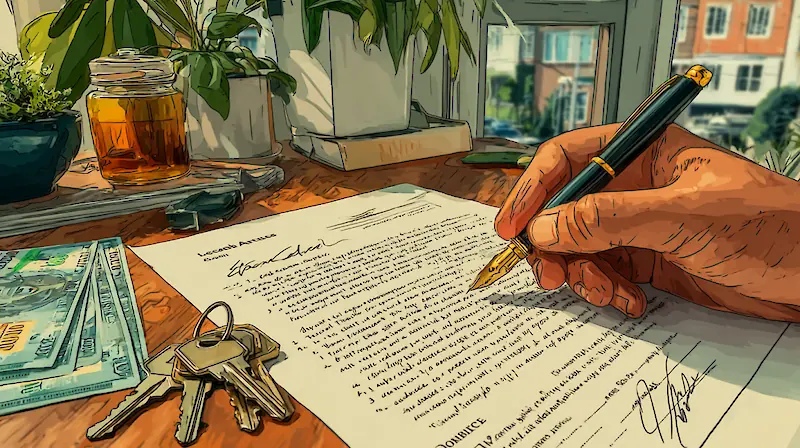
Keys in hand: Your new home awaits
Congratulations! You’ve made it through the entire process, and now it doesn’t seem so daunting, does it? Despite the apparent complexity involving checks and Ejari, the rental process in Dubai is actually very logical and protects the rights of both parties. The key is knowing the rules of the game—and now you do.
Remember: your first home in Dubai is not just walls and a roof. It’s your base, your sanctuary, your launching pad for a new, exciting life in one of the world’s most dynamic cities. Approach your choice thoughtfully, but without fear. You’re armed with knowledge, which means you’re well-equipped to succeed.
Happy house hunting, and welcome home!



















Comments