
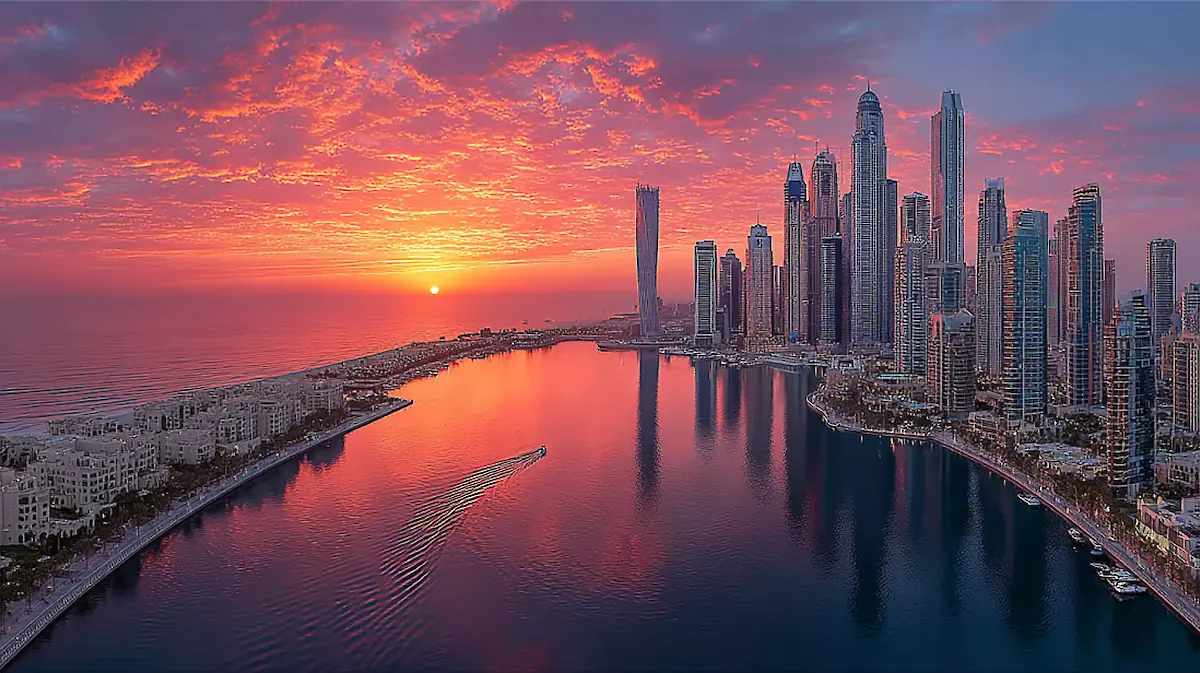
From prestigious skyscrapers in Downtown to creative co-working spaces, we help you find the ideal workspace for your business. A detailed breakdown of prices, districts, and legal nuances.
So, you’ve decided to start a business in Dubai. The picture in your mind paints itself: an office with a view of the Burj Khalifa, meetings in trendy lobbies, life-changing deals... But before you reach that pinnacle, you need to get down to earth and tackle the main question: where, how, and for how much should you rent that perfect office? And this is where things get really interesting. We won’t beat around the bush. Instead, we’ll break down the entire rental process for you, from the strategic choice between the “mainland” and a free zone to the final signing of the Ejari contract. Our goal is to provide you not just with information, but with a clear action plan and a solid understanding of pricing, so you can make an informed decision and avoid costly mistakes.
Mainland vs. free zone: The first choice that determines everything
This is the first—and perhaps the most crucial—choice you’ll have to make. It determines everything: where you’ll be able to operate, who your clients will be, and even the structure of your company. The difference between the “mainland” (Mainland) and a free zone (Free Zone) is simple, but understanding it is key to the success of your business in the UAE.
- Mainland: This license gives you the right to operate throughout the entire territory of the UAE, including serving local clients and participating in government tenders. For most types of business activities, a local sponsor or service agent will be required.
- Free zone: The main advantages are 100% foreign ownership of the company and tax benefits, such as a 0% corporate income tax and import duty. However, business activities are typically limited to the territory of the zone itself or to international markets.
What to choose?: If your clients are companies and residents based directly in Dubai, you will most likely need a Mainland license. If, on the other hand, you are operating for export or with other companies within your free zone, a free zone license will be sufficient.
Map of Dubai’s business districts
Choosing a district in Dubai is not just about selecting an address; it is a strategic decision that shapes your business ecosystem, access to customers and talent, and your company’s image. Now that you understand the difference between the Mainland and Free Zone, you can focus on exploring key locations.
Downtown Dubai and DIFC-The epicenter of finance and luxury
Fact: The DIFC (Dubai International Financial Centre) operates under an independent judicial system based on English common law, making it particularly attractive to international companies.
Jurisdiction: Downtown (Mainland), DIFC (Free Zone). Downtown and DIFC are the business heart of Dubai, where the air is literally charged with big money and ambition. In the elevators, million-dollar deals are discussed, and during lunch in restaurants, you can meet top executives from global corporations. If your business is in finance, law, consulting, or you simply want to establish yourself as a serious player, an office with a view of the Burj Khalifa will be your best calling card.
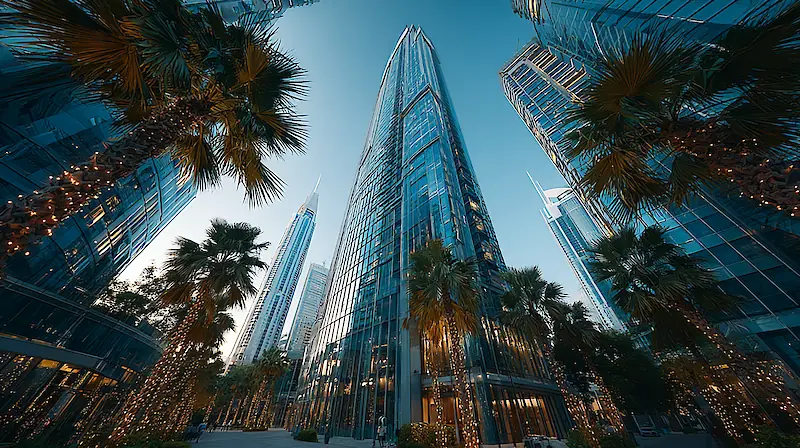
Business Bay - a dynamic business hub
Jurisdiction: Mainland. Business Bay is a more modern and dynamic alternative to Downtown. The area is rapidly being developed with new skyscrapers, hotels, and well-established infrastructure along the Dubai Canal. It offers excellent transport links and a wide range of office buildings of various grades (from A to C), making it attractive to a broad spectrum of companies.
Tip: Many buildings in Business Bay offer "shell and core" offices (unfurnished), allowing you to fully customize the space to your needs, but this requires additional investment in renovation and fit-out.

Media City, Internet City, and Knowledge Park - a technology and creative cluster
Jurisdiction: Free Zone (TECOM Group). Forget ties and strict dress codes. This cluster is Dubai's very own "Silicon Valley," where startup ideas are in the air, and your future investor or brilliant developer might be sitting at the next table in the coffee shop. These are not just office buildings; they are vibrant campuses for IT giants like Google and Microsoft, media agencies, and educational projects, where networking happens naturally—at industry meetups, conferences, and even while waiting in line for lunch.
Specialized zones for your business: These free zones are ideal for companies in the IT, media, advertising, education, and HR sectors. Registering here gives you access to a unique industry environment and a community of professionals.
Which office format suits you?
The choice of office format directly depends on the size of your team, the stage of your business’s development, and the desired level of flexibility. Let’s look at two main options.
Coworking spaces and flexible offices (Flexible/Serviced Offices)
For whom: Freelancers, startups, small teams, and companies that are just testing the Dubai market. This is an “all-inclusive” concept: you get a fully furnished workspace, high-speed internet, access to meeting rooms, reception services, as well as coffee and a valuable community of like-minded individuals. Popular networks include Regus and WeWork.
Pros: Quick start without capital expenditures, flexible contract terms (from one month), and excellent networking opportunities.
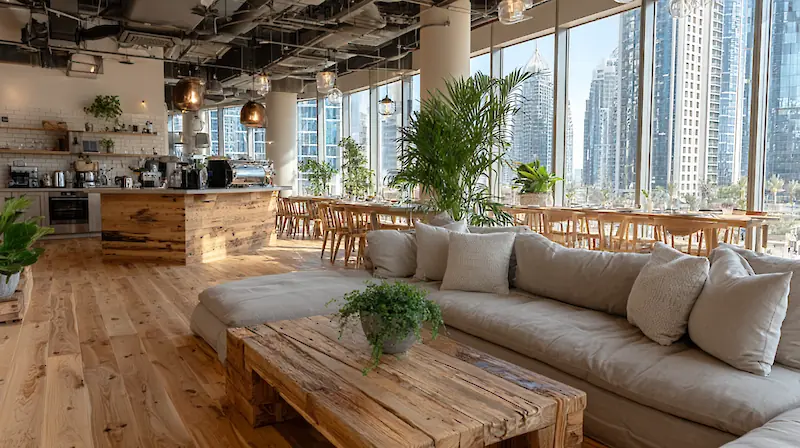
Tip: Before signing a year-long contract, take advantage of a day or week pass. This will allow you to assess the atmosphere, internet speed, and overall convenience of the coworking space in practice.
Traditional long-term lease
For whom: Established medium and large businesses that require full control over their space and branding. This option involves a long-term lease process (usually from 1 year) for an empty space, which can be either "shell and core" (a concrete shell) or with basic finishing.
Pros: Complete freedom of customization, stability, and generally a more favorable price per square meter when concluding a long-term contract.
Warning: Traditional leasing comes with significant initial costs: a security deposit (5–10% of the annual rent), an agent's commission (5%), expenses for renovation and furnishing, as well as connection to utilities (DEWA).
Comparative guide to office formats
This table will help you make an informed decision based on key criteria.
| Criterion | Coworking / Flexible Office | Traditional Lease |
|---|---|---|
| Ideal for | Freelancers, startups, project teams | Medium and large businesses |
| Budget (entry) | Low (monthly payment) | High (deposit, commission, renovation) |
| Contract term | Flexible (from 1 month) | Long-term (from 1 year) |
| Launch speed | Instant (1–2 days) | Time-consuming (several weeks/months) |
| Control | Limited | Full control over the space |
| License | Often provided with the office | Requires separate registration |
Office budget in Dubai: What does it cost?
It is important to understand that the prices below are approximate and may vary depending on the season, building class, floor, and specific contract terms. This information will help you create a realistic budget.
Important: price accuracy: Prices in Dubai's real estate market are highly dynamic. The figures provided here are current as of Q1 2024 and are intended for preliminary budgeting. We strongly recommend that you request up-to-date offers from brokers or check current listings on portals such as Property Finder and Bayut before making a decision.
Cost of flexible solutions
- Coworking desk: 1,000–2,500 AED per month.
- Serviced office for 2–4 people: 5,000–15,000 AED per month.
Cost of traditional leasing
Prices are given per square foot per year (AED/sq. ft./year).
- Business Bay: 100–180 AED.
- DIFC: 200–350 AED.
- Dubai Media City: 120–200 AED.
Example calculation: Let’s calculate an approximate annual budget for a 100 sq. m (about 1076 sq. ft.) office in Business Bay at an average rate of 140 AED/sq. ft.
Annual rent: 1076 sq. ft. × 140 AED = 150,640 AED.
This amount must be supplemented by initial costs, which we will discuss below.
Step-by-step plan for renting an office
Now that the theory is clear, let’s move on to a step-by-step action plan that will help you avoid common mistakes.
Step 1: Budgeting - what to consider besides rent
Rent is just the tip of the iceberg. To avoid unpleasant surprises when your budget suddenly falls apart, let’s break down all the initial and hidden costs you’ll face. Think of this as your mandatory checklist before signing any lease agreement.
- Annual rent: Typically paid in advance in 1–4 installments.
- Security deposit: Usually amounts to 5–10% of the annual rent (refunded at the end of the lease).
- Broker’s commission: 5% of the annual rent.
- Ejari contract registration fees: Around 220 AED.
- DEWA utility deposit: From 2,000 AED for office spaces.
- Chiller (air conditioning) bills: Check whether they are included in the rent or paid separately.
- Cost of obtaining a trade license: Varies widely depending on the type of business activity and jurisdiction.
Step 2: The rental process and required documents
The good news is that the rental process in Dubai, unlike many other areas, is quite clearly regulated. If you know the steps, the procedure will go smoothly without unnecessary stress. Here's what the process looks like from finding a property to receiving the keys:
- Search: Find a reliable broker certified by RERA (Real Estate Regulatory Agency).
- Viewings: Inspect several options to choose the most suitable one.
- Offer: Sign a Letter of Intent to reserve the property.
- Documents: Provide the necessary documents: a copy of your passport, visa, and your company’s trade license.
- Contract: Sign the lease agreement and hand over the payment checks to the landlord.
- Registration: Register the contract in the government’s Ejari system.
Importance of Ejari: Ejari is a mandatory government system for registering lease agreements. Without a registered contract, you will not be able to connect utilities (DEWA) or renew your trade license. Always insist on timely registration of the contract.
The future of work in Dubai: Conclusions and trends
Ultimately, choosing an office in Dubai is your first strategic statement in one of the world’s most competitive markets. The right choice will lay the foundation for growth, while the wrong one will be a costly mistake.
The Dubai market is not for dreamers, it’s for those who know how to calculate and plan. We hope this guide has provided you with all the tools you need to become exactly such a strategist.
Your ideal office is already waiting for you. Good luck!
















Comments