
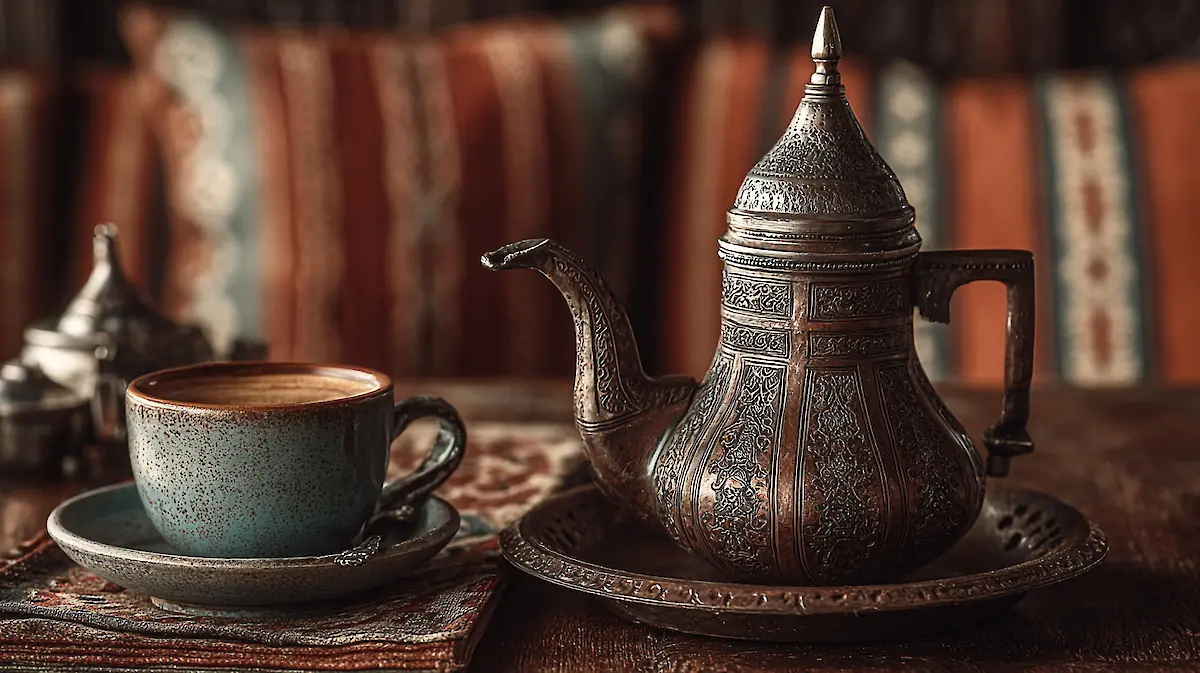
From roadside cafes in Deira to designer tea houses in Jumeirah. Your guide to the world of Dubai’s karak, a drink that unites millionaires and taxi drivers.
Dubai is often associated with the glitz of skyscrapers and a luxury-oriented vision of the future. But to truly feel the city’s pulse, you need to look beyond the towering buildings and focus on the simple, everyday rituals. One of the most important of these rituals is a cup of aromatic, spiced, and scalding-hot karak tea. Forget about simply quenching your thirst; this humble drink is a true “social barometer” of Dubai. Through its taste, price, and serving style, it can reveal more about a neighborhood’s atmosphere than any guidebook. It serves as a bridge between the past and the present, between different cultures and social strata in this remarkable city. This guide will take you into the world of Dubai’s karak, from its history to the secrets of ordering the perfect cup, so you can feel as confident as a local.
What is Karak and why is it So important to Dubai?
To understand the phenomenon of karak, you need to delve into the history and soul of Dubai, a city built at the crossroads of cultures.
Arab hospitality, Indian recipe
At the heart of UAE culture lies a deep respect for hospitality, symbolized for centuries by Arabic coffee, known as “gahwa.” But in the mid-20th century, with the onset of the oil boom, a flood of labor migrants from South Asia poured into the emirate, bringing their own traditions with them—including a love for spicy masala tea. This gave rise to a unique story of cultural synthesis. The recipe for Indian spiced tea was adapted to local conditions: fresh milk, which is difficult to store in a hot climate, was replaced with canned condensed milk. At first glance, this simple solution proved to be pivotal: it not only solved a practical problem but also endowed the drink with its signature sweet, creamy flavor. Karak inherited the Arab concept of hospitality and the Indian recipe, becoming a perfect reflection of Dubai’s spirit.
A drink for sheikhs and builders
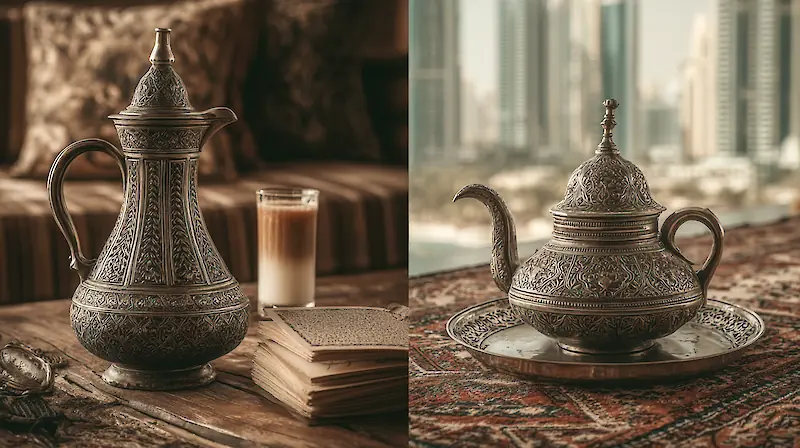
Originally, karak was considered the “builders’ tea”- a cheap, high-calorie, warming beverage that helped restore energy after a hard day’s work. But very soon, it transcended this social niche. Today, karak is a great equalizer, a true “social glue” of Dubai. At roadside cafeterias, you can see everyone: Emiratis arriving in expensive sports cars, taxi drivers taking a break between shifts, office clerks in business suits, and tourists. For just one or two dirhams, everyone becomes part of a shared ritual that erases boundaries and unites people in the multicultural environment of the metropolis.
So what exactly is karak?: Karak, which means “strong” in Urdu, is the soul of Dubai’s streets in liquid form. Imagine a rich, black tea that has been simmered for a long time with milk and a generous helping of spices, with cardamom almost always taking center stage. Sweet, spicy, and warming, it has become the unofficial national drink of the UAE.
A guide to Dubai’s neighborhoods: Where to drink “proper” karak
In Dubai, there is no single standard for karak. Its taste is a direct reflection of the neighborhood’s soul, its history, and its rhythm of life. Let’s embark on a gastronomic journey through the city to find your perfect cup of tea.
Old Dubai (Deira, Bur Dubai): an authentic taste of history
Here, in the labyrinth of narrow streets and bustling markets, karak has retained its most authentic character. The local tea is strong, deeply dark in color, and very sweet to balance its astringency. Its flavor is directly tied to the legacy of the famous Spice Market: cardamom dominates the bouquet, often complemented by sharp fresh ginger and aromatic cloves. The ritual of drinking it here is also unique—it’s a quick and energetic process. Tea is enjoyed standing at a serving window or ordered straight from a car, allowing you to immediately rejoin the vibrant flow of the old city.
"Authentic" Dubai (Satwa, Al Karama): karak as part of everyday life
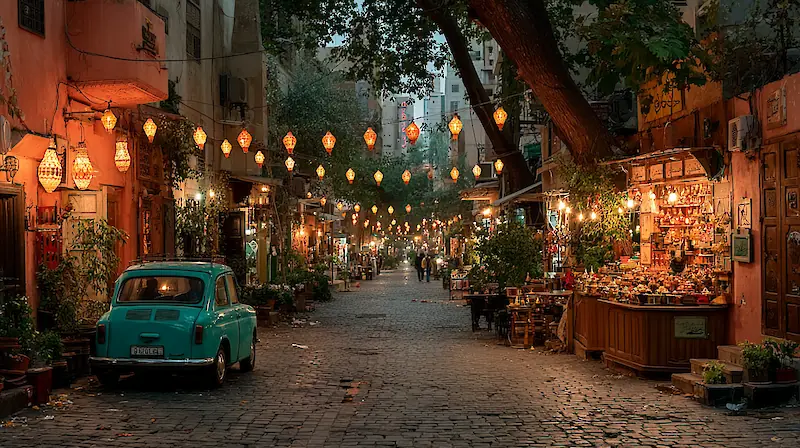
In neighborhoods like Satwa and Al Karama, you’ll find karak serving as the fuel for the working city. These are less touristy but incredibly vibrant areas where Dubai appears without any gloss. Here, tea is not an attraction but a daily necessity, almost a ritual. Its taste strikes a perfect balance: just sweet enough, just spicy enough, without the extreme astringency of the old quarters or the designer flair of Jumeirah. This is the honest, reliable, and authentic karak that taxi drivers drink during shift changes and office workers enjoy during their lunch breaks. And yes, the value for money here is probably the best in the city.
Modern Dubai (Jumeirah, Downtown, d3): glamour, design, and new flavors
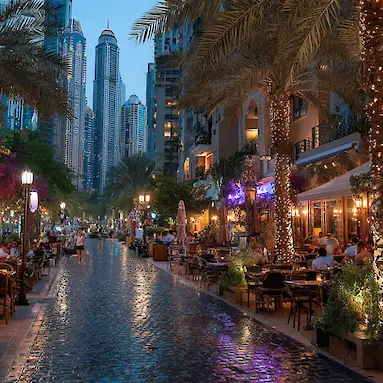
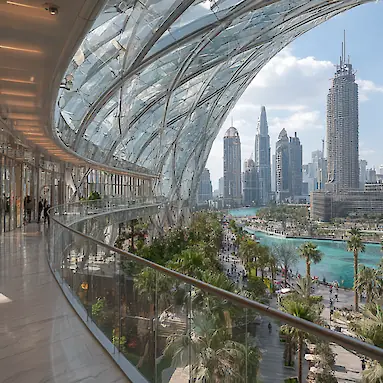
In cosmopolitan and trendy districts like Jumeirah, Downtown, or Dubai Design District (d3), karak has undergone a real transformation. Here, it has evolved into a “designer” drink tailored to the tastes of tourists and expats of the new generation. In stylish cafes, you’ll be offered signature versions: karak with expensive saffron that gives it a golden hue, with subtle notes of rose water, or even vegan options made with almond or coconut milk. The taste of such tea is milder and less sweet, and the presentation is refined and “Instagrammable.” This is no longer a quick street ritual but rather an element of a leisurely brunch or a business meeting.
How to choose your ideal karak
To help you find a karak to your liking, we’ve summarized the key differences in a simple table. Choose the experience that suits you best today!
| Criterion | Old Dubai (Deira, Bur Dubai) | “Real” Dubai (Satwa, Al Karama) | Modern Dubai (Jumeirah, Downtown) |
|---|---|---|---|
| Flavor | Strong and spicy (cardamom, ginger) | Balanced, traditional, rich | Featuring signature notes (saffron, rose) |
| Sweetness | Very sweet by default | Sweet, but you can ask for less sugar | Moderately sweet, flexible options |
| Atmosphere | Bustling streets, ordering “on the go” | Lively cafeterias, local flavor | Stylish cafes, leisurely brunches |
| Approximate Budget | Very affordable (1–3 dirhams) | Affordable (2–5 dirhams) | Mid-range and above (from 10–15 dirhams) |
| Perfect for... | Seeking authenticity and the rhythm of the old city | Immersing yourself in everyday Dubai life | Comfort, aesthetics, and new flavors |
Note: Prices are approximate, current at the time of writing, and subject to change.
The art of ordering: How to drink karak like a local
Ready to place your order? Here are a few tips to help you feel confident and get exactly the tea you want.
Three ways to get your tea
- From a machine: The most popular method in roadside cafes. Simply drive up to the establishment, give a short honk (one or two blips), and a waiter will come to your car to take your order and bring your tea right to the window.
- At the Window: The perfect option for pedestrians. Most street-side cafés have a special window for quick takeout orders.
- Inside the Café: In more modern establishments, you can place your order at the counter or at a table, just like in any regular coffee shop.
A few rules of tea etiquette
Observing simple norms of politeness is always appreciated in the local culture.
- Use your right hand: It is customary to receive a glass of tea, hand over money, and take change exclusively with your right hand, as the left hand is considered “unclean” in Arab culture.
- Show respect to elders: If there is an elderly person in line ahead of you, it is considered good manners to let them go ahead.
- Be patient: Popular spots can get crowded, and there may be queues. Don’t rush the staff—your fragrant tea will be prepared for you without fail.
Your mini-phrasebook for ordering karak
Although almost everyone speaks English, a few phrases in Arabic will earn you a warm smile and help you build a connection.
- "One karak, please" — Wahid karak, min fadlak (Wahid karak, min fadlak)
- "Less sugar" — Sukkar khafif (Sukkar khafif)
- "No sugar" — Bidoon sukkar (Bidun sukkar)
- "To go" — Saffari (Saffari) or simply Take away
- "Thank you" — Shukran (Shukran)
Full immersion: Proven spots, snacks, and cultural nuances
Proven spots where you can feel the karak culture
- Al Fahidi Historical neighbourhood: Stroll through its narrow streets, where, in the shade of ancient wind towers, you can find tiny cafés serving karak prepared according to recipes passed down from generation to generation.
- Deira markets (Spice Souk and Gold Souk): Here, among sacks of cardamom and cinnamon, tea is brewed right before your eyes, and the very air is infused with its spicy aroma. This is karak in its natural habitat.
- Ravi restaurant (Satwa district): More than just a café—it’s a cultural phenomenon. Order their legendary strong karak along with spicy Pakistani cuisine to experience the true taste of multicultural Dubai.
- Cafeterias in Satwa: Don’t look for a specific name on the map. Just pick the busiest one, where cars buzz and people laugh—that’s where you’ll find the most honest and heartfelt karak in the city.
The perfect pair: best snacks to enjoy with tea
The spicy and sweet flavor of karak is perfectly enhanced when paired with traditional snacks:
- Luqaimat: Small, round doughnuts generously drizzled with date syrup and sprinkled with sesame seeds. Their sweetness beautifully balances the astringency of the tea.
- Paratha: A flaky Indian flatbread often served with cheese. An excellent option for a hearty snack.
- Khamir: Light, airy Arabic buns, sometimes filled with date paste. Soft and delicate, they perfectly complement the hot beverage.
Karak and Ramadan: a special role during the Holy month
If your trip coincides with the holy month of Ramadan, you will witness the special role that karak plays. The daytime hustle and bustle at tea stalls subsides—eating and drinking in public places before sunset is prohibited. However, as darkness falls, karak becomes one of the main drinks for Iftar (the evening meal to break the fast), gently helping to restore energy after a day of fasting. Cafeterias come alive, stay open late into the night, and transform into social hubs where warming tea is enjoyed not only during Iftar but also during Suhoor—the pre-dawn meal.
Before embarking on your Karak tour...
Dubai is a welcoming yet conservative city. To ensure a smooth journey, keep a few key rules in mind.
Key rules of conduct in Dubai:
- Respect local traditions: Refrain from public displays of affection.
- Alcohol—only in permitted places: hotels, bars, and restaurants.
- Ask for permission before taking photos: do not photograph local residents without their consent.
- Use your right hand: always take and give food, drinks, and money with your right hand.
- Observe Ramadan rules: if you are in Dubai during the holy month, do not eat, drink, or smoke in public places during daylight hours.
Your journey into the world of Dubai’s karak is just beginning
It turns out that the key to understanding Dubai lies not at the top of a skyscraper, but in a simple paper cup of tea. Karak convincingly shows that the true soul of this city is not in its ostentatious luxury and world records, but in the small, everyday rituals that bring everyone together. Choosing a tea is choosing the kind of experience you want to have with the city today: the spicy authenticity of the Old Town, the honest energy of the working-class districts, or the glossy aesthetics of the modern neighborhoods.
So, the next time you find yourself in Dubai, do one simple thing: step off the well-trodden tourist path. Drop into a small, unassuming café, order a cup of karak for just one dirham, and simply observe the life around you. It is in moments like these that the most authentic stories and flavors of Dubai are hidden.











Comments