
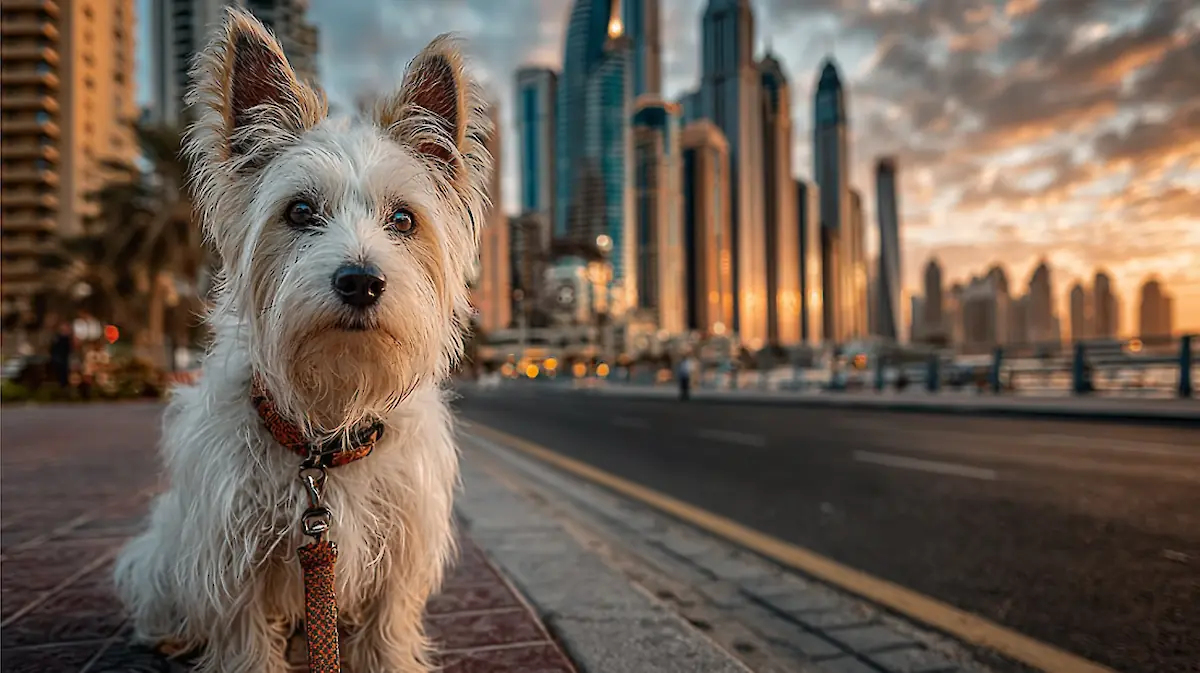
Dubai does not look like a city that was designed with dog owners in mind. Formally, the rules are strict: public transport is closed to animals, dogs are not allowed in most shopping malls and public buildings, and the list of dog-friendly spaces is limited. The city developed for a long time as a place oriented toward people without pets, and that still shows.
In practice, the picture is more nuanced. Dubai is a city of individual solutions. Many things are not explicitly prohibited, but they are not provided for by default either. As a result, how comfortable it is to move around with a dog depends less on formal permission and more on how well the owner understands the city’s logic and knows how to work within it.
The main mistake is trying to act “as in Europe.” Expecting that a dog will be calmly allowed on the metro, into a café, or into a shop, or that infrastructure will automatically adapt to pet owners. In Dubai, that approach quickly leads to frustration — for both the person and the dog.
A much more effective strategy is to accept the limitations as a starting point. Public transport is ruled out immediately. Walking routes are planned with climate and ground surface in mind. Daily movement is built around a car or taxis, and walks are tied to specific areas where they are genuinely safe and comfortable.
Another important point is social perception. Dogs in Dubai do not trigger open negativity, but they are not a routine part of urban life either. It is not customary to approach someone else’s dog or show active interest. This means that calm, controlled behavior matters more than any formal permission. The less noticeable the situation, the easier it is for everyone involved.
Once this model is accepted, the city stops feeling hostile. It is simply different. Dubai does not aim to be dog-friendly in the traditional European sense, but it leaves enough room for those who are willing to act thoughtfully and without inflated expectations.
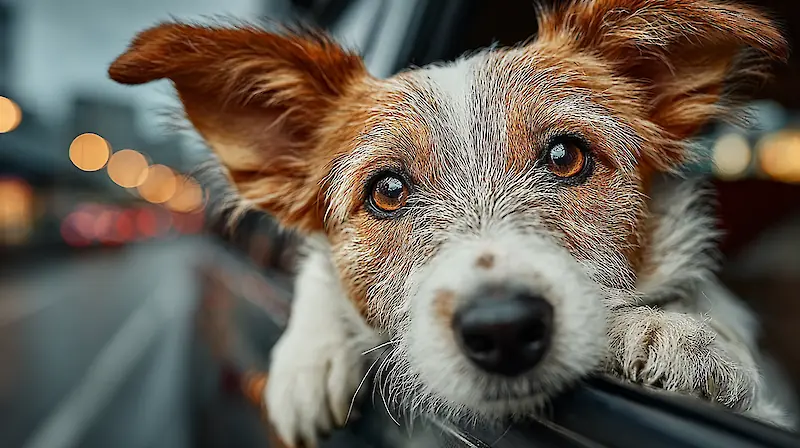
Taxis and special options for traveling with a dog
In addition to standard city taxis, where everything depends on the individual driver, Dubai offers more predictable options for traveling with a dog. These are not mass services, but they do work and are used in practice by pet owners.
Ride-hailing apps with pet options
Some taxi services offer dedicated options for traveling with animals. For example, in the Yango app, it is sometimes possible to select a ride marked as pet transport. In this case, the order is sent to a driver who has already agreed to accept passengers with animals. This does not guarantee acceptance, but the chance of refusal is noticeably lower than with a standard ride requested without prior notice. This option works best for small dogs and cats, especially when the animal is in a carrier or placed on a blanket.
It is important to understand that the presence of such an option does not make the service universal. During peak hours or high demand, a driver may still cancel the ride, so these trips are best planned with extra time.
Specialized pet taxis
Dubai also has dedicated services focused specifically on transporting animals. These are not regular taxis, but companies designed for pet owners. Examples include Chauf-fur Pet Taxi and Furry Travel. These services use vehicles prepared for animal transport and operate by advance booking.
Pet taxis are most commonly used:
-
for trips to the veterinarian or groomer
-
for airport transfers
-
in situations where predictability and zero refusals are essential
The cost is higher than standard taxis, but in return the owner avoids negotiations on the spot and gains peace of mind. In some cases, pet taxis can transport an animal without the owner present, which is arranged in advance.
What to keep in mind
Even with special options and services available, there is no single “universal” solution for traveling with a dog in Dubai. Pet-friendly formats exist, but they are situational and require planning. This is why most dog owners combine different approaches: a private car for daily use, pet taxis for critical routes, and regular taxis only when circumstances allow.
Private car: The simplest and most reliable option
If you live in Dubai with a dog or plan to move around the city regularly, a private car solves almost all logistical issues. There are no restrictions on transporting animals in private vehicles, and this is the option chosen by most dog owners.
Dubai is built for cars: wide roads, clear navigation, constant air conditioning. For dogs, this is also an advantage — short exits, minimal chaos, and protection from heat.
Things to keep in mind:
-
air conditioning is a necessity, not an option
-
in summer, walks are best planned early in the morning or late in the evening
-
water for the dog should always be on hand
In practice, dogs tend to feel the calmest inside a car in Dubai, fewer stimuli and fewer surprises.

Walking: Possible, but with conditions
Walking a dog in Dubai is possible, but it requires more attention than in most European cities. Dubai was built as a car-centric metropolis, and long pedestrian routes are the exception rather than the rule. This is especially noticeable in summer, when climate becomes the main limiting factor.
Comfortable walking is limited to specific areas, not the city as a whole. Residential districts with waterfronts, promenades by the water, and neighborhoods with shade from buildings, trees, or canopies and sufficiently wide sidewalks work best. In these areas, walking feels normal and does not attract attention.
The most serious issue is heat and ground surface. In warm months, asphalt, concrete, and tiles heat up very quickly and can burn a dog’s paws. This is not a matter of discomfort, but a real risk of injury. Checking the surface with your hand before walking is a basic rule, not overcaution. If it is hot for your palm, it is unsafe for paws.
Because of the climate, walks must be adjusted to the time of day. Early morning and late evening are often the only safe windows during hot seasons. Daytime walks are only feasible for short periods and only in shaded areas. Water and frequent breaks are mandatory, not optional.
There is also a social aspect to consider. Dogs do not provoke open negativity in Dubai, but they are not a familiar part of everyday urban life. Active interaction with someone else’s dog is uncommon. Calm behavior, a short leash, and minimal noise matter more than any formal permission. The less visible the walk, the easier it is.
It is also important to be aware of local rules. Some residential compounds and public spaces have their own restrictions on dog walking. These are usually clearly marked and should be taken literally — arguing with security or staff is pointless.
In short, walking a dog in Dubai is possible, but it requires planning. This is not a “step outside and go anywhere” city. It is about choosing a route consciously, picking the right time, and constantly monitoring the dog’s condition. With that approach, walks remain safe and stress-free for both the dog and the owner.
Public transport: Almost always no
Public transport in Dubai is not designed for transporting pets. The metro, trams, and city buses do not allow dogs, with very rare exceptions for service or assistance animals. Size does not matter: even a small dog in a bag or carrier is formally a violation of the rules.
Occasionally, people share stories of having ridden “without issues,” but these are coincidences, not a workable strategy. Dubai’s public transport system has active control. Station staff, inspectors on trains, and bus drivers have the authority to stop a journey and require passengers to leave. Fines are possible, and arguing with staff is pointless, the rules are explicit.
The environment itself is another factor. Metro and tram cars are often crowded, especially during peak hours. Noise, dense crowds, and strong air conditioning create additional stress for animals. Even if transport were technically allowed, it would be uncomfortable and potentially unsafe for most dogs.
For these reasons, public transport is best excluded entirely from any plan involving a dog. This saves time, stress, and the risk of conflict or fines. In reality, routes should be built around taxis, private cars, or specialized pet services - these are the options that actually work.

What works best in practice
Getting around Dubai with a dog is not about universal solutions. It is about choosing the right format for each situation.
-
Taxis — suitable for short trips and small dogs, if you are prepared for refusals
-
Private car — the most stable and comfortable option
-
Walking — only in appropriate areas and at the right time
Dubai does not try to appear dog-friendly in words. Instead, it offers clear boundaries. Once those are accepted, the city often turns out to be far more manageable than it first appears.






















Comments