
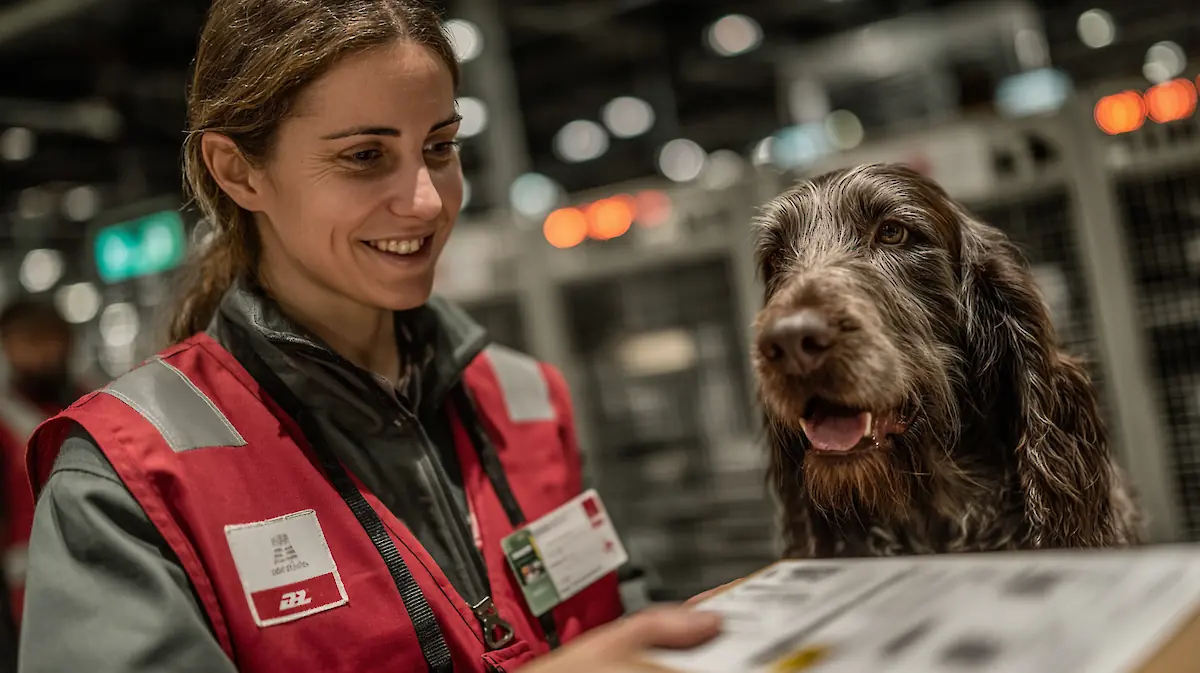
From gathering documents and choosing a carrier to finding pet-friendly accommodation - we explain how to organize a comfortable and safe flight for your four-legged friend.
Dreaming of life in sunny Dubai, with its futuristic skyscrapers and golden beaches, doesn’t have to mean saying goodbye to the most loyal member of your family. Imagine sitting on the terrace of your new home, with your faithful companion lying beside you, happily wagging its tail. This picture is entirely real, but it requires serious preparation. Right from the start, it’s important to understand that transporting a dog to the United Arab Emirates isn’t just about buying another ticket; it’s more like a special operation that demands meticulous planning. It will require your attention to detail, patience, and strict adherence to the rules. Think of this article as your personal navigator on this journey. We’ll guide you through all the pitfalls of bureaucracy and the shoals of veterinary requirements so that you reach your destination without losing your nerves—or your money. Our goal is to turn your fear of the unknown into confidence: yes, it’s not easy, but with a solid plan, it’s more than possible.

What you need to know before you start: Key rules and budget
Before you pack your bags and your pet’s favorite squeaky toy, let’s sort out the main “musts” and “must-nots” from the UAE authorities. These three pillars are what the entire venture rests on. If you don’t meet these requirements, further planning, unfortunately, becomes pointless. Shall we check?
- Pet’s age: Your traveling companion must already be a teenager. Puppies younger than 15 weeks (about 3.5 months) are not allowed to be imported into the UAE. This is because they need to complete a full vaccination course and have enough time for their immune system to develop.
- Method of travel: Only in a dedicated cargo hold. Dogs fly to Dubai exclusively as “manifested cargo.” The term sounds intimidating, doesn’t it? It immediately conjures up images of a dark, cold compartment. Relax: this has nothing to do with reality. Essentially, it just means that your dog will have its own “ticket” and a separate, specially equipped space. This is a heated, ventilated, and illuminated compartment where comfortable pressure is maintained, a kind of “business class” for animals, completely isolated from regular baggage. Transport in the passenger cabin or the baggage hold is strictly prohibited, with the only exception being officially registered guide dogs.
Financial considerations: be prepared for significant expenses
Be prepared from the outset that transporting a pet is a serious investment, comparable in cost to several business-class tickets for a human. Budget planning is one of the first and most important steps. The main expense items include:
- Services of a professional animal relocation agency.
- Cost of air transportation in cargo mode (depends on the dog's weight and size).
- Veterinary procedures: microchipping, vaccination, tests, and certification.
- Government fees in the UAE: obtaining an import permit and customs duties upon arrival.
Estimated budget: Expect to budget between $2,000 and $5,000 or more. The final cost depends heavily on the dog's size, the airline chosen, and the service package provided by your relocation agent. Always request a detailed quote from several contractors.
Do not bring these breeds: breeds banned from entry into the UAE: The authorities in the UAE take security very seriously. There is an official list of breeds whose entry into the country is strictly prohibited. Make sure your pet is not on this list to avoid the heartbreaking scenario of having your animal deported right at the border. Such breeds include the pit bull terrier, American Staffordshire terrier, Argentine Dogo, Brazilian Fila, Japanese Tosa Inu, and their crossbreeds.
The big journey: A step-by-step flight plan
To make the complex process less daunting, we’ve broken it down into three clear stages. By following this plan, you can keep every step under control and be confident that you haven’t missed anything.
Stage 1: The veterinary marathon (start 3–4 months before departure)
This is the most important and time-consuming stage. It’s here, in the veterinarian’s office, that you either pave a smooth path to Dubai or set up a maze of obstacles for yourself. Mistakes at this stage are the most costly, so approach it with the utmost attention to detail. We strongly recommend finding a clinic with real experience in preparing animals for international flights.
Your veterinary checklist:
- Step 1. Microchip: Your pet’s electronic passport. A chip conforming to the ISO 11784/11785 standard must be implanted before rabies vaccination. This is an iron rule.
- Step 2. Vaccination: All vaccinations according to the schedule. A comprehensive vaccine (against distemper, parvovirus, adenovirus, and leptospirosis) and a rabies vaccine are mandatory. Make sure all vaccines are approved for import into the UAE.
- Step 3. Rabies antibody titer test: The longest quest. This blood test, which confirms the presence of immunity, must be performed at an accredited laboratory at least 3 months before the intended date of departure. The result must be at least 0.5 IU/ml.
- Step 4. Parasite treatment: 14 days before the flight, carry out a complete “clean-up” for both external (fleas, ticks) and internal (worms) parasites, with a mandatory entry in the pet’s veterinary passport.
- Step 5: International veterinary certificate (Form 5a): Your “diploma” marking the completion of the vet marathon. This key pass to the aircraft—a formal government health certificate—is issued at the very last moment, 2–5 days before departure. Think of it as the final boss in the game.
Stage 2: Bureaucracy and logistics (30 Days Before Departure)
Once the veterinary marathon is over, the paperwork begins, along with booking a ticket for your furry passenger. It is at this stage that a relocation agent transforms from a “nice-to-have” option into your main savior. Trust us—money spent on professionals isn’t an expense; it’s the best insurance against gray hair, a missed flight, and the nightmare of a pet stranded in a foreign country.
Your golden ticket: import permit: This is the key document without which your dog will not be allowed on the plane. Essentially, it is an official “invitation” from the UAE Ministry of Climate Change and Environment (MOCCAE) for your pet. You must obtain it online in advance by uploading all your veterinary documents. The permit is valid for only 30 days.
A home for the duration of the flight: how to choose the right carrier
The transport container must strictly comply with the standards of the International Air Transport Association (IATA). Here’s what to look for:
- Durable and reliable: Choose a carrier made of solid plastic or metal with secure fastenings.
- Spacious: The dog should be able to stand at full height, sit, and turn around freely inside.
- Well-ventilated: Ventilation openings should be on several sides.
- With a secure lock and water bowl: The latch should prevent accidental opening, and a water bowl should be securely attached inside.
Stage 3. Day X – the airport and the long-awaited meeting in Dubai
This is the most nerve-wracking day. It’s important to mentally prepare for the fact that you and your dog will fly separately and meet only after completing all formalities in Dubai. At the departure airport, you need to arrive at the cargo terminal 4–6 hours before the flight to hand over your pet and complete all documentation.
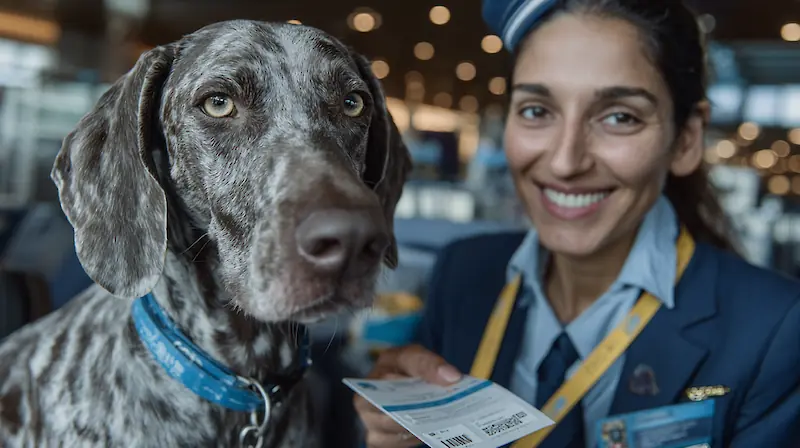
The process upon arrival in Dubai:
You’ve landed, passed through passport control, and your heart starts pounding: “Where’s the dog?!” Stay calm. The final act is about to begin, and you have a key supporting role in it. The lead role is played by your agent, who will already be waiting for you in the arrivals hall to take you under their wing and guide you through the labyrinth of the local "Cargo City."
- Meeting with the agent: He is already waiting for you in the arrivals hall.
- Trip to Cargo Village: This is a special area at the airport where all live cargo is delivered.
- Veterinary inspection: A representative from the ministry will check your documents and examine your dog.
- Payment of fees: You will need to pay customs and veterinary fees (about 500–1000 AED).
- Hugs with your pet! The most anticipated moment, finally, you are together.
A new life in Dubai: adapting and living with a dog
The flight is over, and now the most exciting part begins, the life in Dubai. Let's figure out where you and your pet will feel comfortable and how to handle everyday tasks.
Pet-friendly housing: from finding a neighborhood to condominium rules
The market for pet-friendly housing in Dubai is growing rapidly. However, there are some nuances to consider when searching.
Neighborhood Overview:
- JVC (Jumeirah Village Circle): A true green oasis for dog owners, with numerous parks and spacious apartments at reasonable prices.
- Downtown Dubai: Life in the heart of the action comes with its own set of rules. It’s prestigious, but dog-walking areas are limited, and building regulations are very strict.
- Dubai Marina / JBR: Walks with a million-dollar view. A long promenade is ideal for walking your dog, but you need to check the specific rules of each skyscraper.
The importance of 'building policy':
Remember this as a mantra: verbal assurances from a real estate agent or general neighborhood rules are worth nothing unless they’re put in writing. Only an official letter (NOC — No Objection Certificate) from the building’s management company will save you from the prospect of being evicted with your dog onto the street just one month after moving in. Before signing a lease, always request written confirmation that living with your dog (specify breed and size) is permitted.
The transportation issue: how to get around the city
Getting around Dubai with a dog requires careful planning, as strict restrictions are in place.
Important: public transport is prohibited: This is one of the key practical considerations. The metro, buses, and trams do not allow pets (except for guide dogs). Traveling in a regular taxi depends on the driver’s discretion, and rejections, especially for large dogs, are common. The most reliable way to get around is by renting a private car or calling a specialized pet taxi.
Health and care: veterinarians, groomers, and pet stores
Dubai offers a well-developed infrastructure for pet care. You can easily find modern veterinary clinics, including 24-hour hospitals, professional grooming salons, and large pet stores with a wide range of food, toys, and accessories.
Walks and leisure: where dogs are allowed and where they are not
Although dogs are strictly not allowed on public beaches, the city is seeing an increasing number of specialized fenced parks for walking dogs. The number of pet-friendly cafes is also growing, especially in areas popular with expats, where you can enjoy a coffee in the company of your four-legged friend. We recommend looking for up-to-date information in local communities and on specialized online resources.
Laws and etiquette: how to be an exemplary dog owner in the UAE
In the UAE, being a dog owner means being an ambassador of goodwill. Two golden rules apply: always keep your dog on a leash, and clean up after your pet immediately and without exception. Fines for violations here are not just intimidating, they are actually enforced.
Another important point is cultural respect. Not everyone here grew up surrounded by dogs, and some people may be wary of them. Keeping your dog closer on a short leash when encountering passersby is not a restriction of freedom, but a simple gesture of politeness that is highly valued.
Final briefing: Your checklist and welcome home!
Let’s bring together all the key steps of this long journey once again. Keep this list handy, it’s your main helper.
Checklist for a successful move:
- ✅ Start early: The entire process, from the first vet visit to meeting in Dubai, will take at least 4 months.
- ✅ Plan your budget: Flying your pet is a significant expense, be prepared for it.
- ✅ Trust the professionals: A relocation agent is your best friend and your guarantee of peace of mind throughout this process.
- ✅ Be a perfectionist with your documents: Double-check every letter, number, and date in your veterinary certificates.
- ✅ Plan your life “on the ground”: Find pet-friendly accommodation in advance and carefully plan your transportation logistics.
Yes, this journey is not for the faint of heart. There will be moments when you feel like giving up. But one day, sitting in a café on the Dubai Marina promenade and feeling the warm breath of your best friend under the table—your companion who made this journey with you, you’ll realize: it was all worth it. Every dirham spent, every sleepless night, and every gray hair. Welcome home.






















Comments