

From predatory exchange rates in stores to shawarma for 5 dirhams: your honest guide to real prices in Dubai. Forget everything you’ve read in conventional travel guides. We break down transportation, food, shopping, and hidden costs the way locals do.
Introduction
Dubai knows how to dazzle. It’s a city of records, where the future seems to have already arrived, and luxury has become the very air everyone breathes. This image is alluring, mesmerizing, and... subtly drains the wallets of those who aren’t prepared for it. It promises you a vacation on the edge of fantasy, but often forgets to mention just how much that fantasy costs. Yet behind this glittering facade lie its own nuances. Ignorance of local specifics can turn a dream vacation into a series of frustrating and unjustified expenses. It’s important to understand: this isn’t malicious intent, but simply the characteristics of a highly competitive market, where information is your main ally. Think of this article as your personal “financial VPN” for Dubai. We won’t lead you along well-worn tourist routes. Instead, we’ll give you a set of keys that will help you sidestep the most expensive traps and unlock the Dubai that locals see. After reading this, you’ll know where the system tries to overcharge you, how to avoid it, and what you should really spend your saved dirhams on—experiences, not a “tax on ignorance.”

Homework for an A-student: Preparing for Dubai to avoid paying for mistakes
Winning the battle for your budget starts at home, long before the aircraft's landing gear touches Dubai's soil. The following steps may seem routine, but trust us: every minute spent on this preparation will save you hours, nerves, and, most importantly, dirhams once you're on the ground.
Financial literacy: how to avoid losing money on currency exchange and fees
The wallet's greatest enemy: dynamic currency conversion (DCC)!: If the payment terminal kindly offers to let you pay in your home currency (rubles, dollars), it's a trap. Always refuse and choose to pay in the local currency (AED). The terminal's exorbitant conversion rate can 'bite off' up to 5–7% of the amount.
Smart financial management begins with the right currency exchange. The exchange rate at Dubai Airport is the least favorable, so only exchange a minimal amount there for a taxi and initial expenses. It's better to exchange the bulk of your money at numerous exchange bureaus in shopping malls (such as Al Ansari) or in city offices—where the rate is as close as possible to the official rate. If you need cash, withdraw it from ATMs of ADCB, HSBC, or Mashreq. Unlike most other banks, they typically do not charge an additional local fee for withdrawals made using foreign cards.
Always connected: SIM cards, Internet, and calls home
Upon arrival at the airport, you’ll easily find counters of local providers- du, Etisalat, and Virgin Mobile, where you can purchase a tourist SIM card or eSIM. Stable internet is essential for navigation and booking services, but there’s an important nuance when it comes to calling home.
Digital feature of the UAE: Traditional audio and video calls via WhatsApp, FaceTime, and Telegram do not work here. To stay connected with loved ones, install a VPN service before your trip or be prepared to use paid local apps such as BOTIM or GoChat.
Health and peace of mind: first aid kit, insurance, and emergency services
In Dubai, the sun is both your greatest enemy and your best friend. To keep it friendly, remember this mantra: “always carry a bottle of water.” Your daily intake should be at least 3–4 liters; otherwise, you may become acquainted with the local healthcare system before you see the Burj Khalifa. The city has major pharmacy chains, such as Life Pharmacy and Aster, that operate around the clock and stock most over-the-counter medications. To feel completely at ease, simply save the emergency service numbers from the table below in your contacts. You’ll likely never need them, but knowing that help is just a phone call away is more reassuring than any tranquilizer.
| Service | Phone Number | When to Call |
|---|---|---|
| Police / Ambulance | 999 | For any emergency situations requiring immediate intervention. |
| Ambulance (separately) | 998 | A priority number for calling medical personnel. |
| Tourist Police | +971-4-609-999 | For non-criminal incidents: lost items, disputes with vendors. |
Must-have apps on your smartphone
- Transport: RTA Dubai, S'hail (for tracking buses).
- Taxis and Delivery: Careem (for ordering Hala taxis and food), Uber, Talabat (food delivery).
- Discounts: The Entertainer (coupons offering "2 for the price of 1" at restaurants).
- Navigation: Google Maps, Waze (if you plan to drive).
Checklist: preparing for departure
- [ ] Documents: Ensure that your passport is valid for at least 6 months beyond your travel date.
- [ ] Finances: Notify your bank about your trip to avoid card blocking.
- [ ] Bookings: Print out or save all tickets and hotel and tour booking confirmations on your phone for offline access.
- [ ] First Aid Kit: Assemble a basic set of medications you may need, including moisturizing eye and nasal drops.
Navigating the city: Mastering Dubai's transport system
Dubai's transportation system is a model of modernity and convenience. However, to ensure it works for you rather than against your wallet, you need to know a few key rules.
Nol Card: the only pass you need
The first thing you should do once you arrive in Dubai is forget about single-use transit tickets. Your only ticket to the world of subways, buses, and trams will be the Nol card. This isn’t just a matter of convenience—it’s a matter of common sense and cost savings. Purchasing a Nol card is your first investment in smart travel around the city.
A rookie mistake that costs money: Always tap your Nol card on the validator not only when entering but also when exiting! If you forget to 'check out,' the system will charge you the maximum fare (7.5 AED), even if you only traveled one stop.
It’s important to remember that to start any journey, your card must have at least 7.5 AED on its balance—this amount is reserved by the system. As for the Gold Class card, which grants access to more comfortable train cars, purchasing it is justified only during peak hours (from 7:00 to 9:30 and from 17:00 to 20:00) on the busiest sections of the red metro line. At other times, it’s an unjustified overpayment. Before you leave, any remaining dirhams on the card (if they exceed 20 AED) can be refunded at the metro ticket office.
Metro, buses, and trams: life hacks for comfortable journeys
During peak hours, public transportation in Dubai can be extremely crowded. To make your trips more comfortable, use these tips:
- Choose the right carriage: To get to Dubai Mall more quickly from Burj Khalifa/Dubai Mall station, board the carriages at the front of the train (if you’re traveling from the Jebel Ali side).
- Use women-only carriages: Each metro train has a dedicated carriage for women and children. Men are not allowed in these carriages, and for women, it’s a great opportunity to travel in a more spacious environment.
- Remember the rules: Eating, drinking (even water), and chewing gum are strictly prohibited on the metro and buses. The fine for violating these rules is 100 AED. Luggage is limited to one suitcase and one piece of hand luggage per person.
Taxi or Uber? Let’s compare which is more cost-effective
In Dubai, both government-operated RTA taxis and popular services like Uber and Careem are available. The latter also offers the Hala Taxi option—a way to call a regular RTA taxi through the app.
| Service | Base Fare (AED) | Price per km (AED) | Minimum Fare (AED) | When It’s Most Cost-Effective |
|---|---|---|---|---|
| RTA Taxi (hail from the street) | 5 (day) / 5.5 (night) | 1.82 | 12 | The cheapest base fare if you manage to catch a cab on the street. |
| Hala Taxi (via Careem) | 8 (day) / 9 (night) | 1.82 | 12 | Ideal for short trips outside peak hours. Convenient to call with a small surcharge. |
| Careem / Uber | 8–12 | 2–3 | 15–20 | During peak hours, the fare can increase by 1.5–2.5 times due to dynamic pricing. |
So, what’s the bottom line? Remember this simple rule: For most short trips during non-peak hours, call Hala Taxi through Careem—it’s the perfect balance of price and comfort. Caught in rush hour or see a free RTA taxi with a green light on the street? Feel free to hail it directly—chances are, it’ll be cheaper. And here’s the ultimate life hack: Before every trip, spend 10 seconds comparing prices on Uber and Careem. This habit will save you quite a few dirhams.
Car rental: freedom of movement or extra expenses?
Renting a car offers freedom, but it’s often economically impractical for tourists whose routes are confined to central areas.
Hidden costs of renting a car: Keep in mind that the rental cost will be supplemented by Salik toll roads (4 AED per passage), hourly parking (2–4 AED/hour), and very high fines. For a tourist moving around the city center, public transport and taxis almost always turn out to be more cost-effective and convenient.
As an alternative for short trips, you can consider car-sharing services (such as Ekar and Udrive), but you’ll need an International Driving Permit (IDP) to register with them.
Entertainment and attractions: Pay less, see more
Dubai dazzles with its iconic landmarks, from the Burj Khalifa to the Museum of the Future. Visiting these attractions without blowing your entire vacation budget is entirely feasible.
Golden Rule #1: Buy tickets online
Buying tickets at the ticket counters on-site is the biggest mistake tourists make. First, it’s almost always 15–25% more expensive. Second, during peak season, tickets for your preferred time may simply not be available. Always book tickets on the official websites of attractions a few days, or better yet, weeks in advance of your visit. This will save you both money and stress.
Tourist passes: Is it worth the hassle?
For those with a packed cultural itinerary, it’s worth considering the Dubai Pass. This tourist pass offers bundled access to several dozen popular attractions at a substantial discount. Let’s do the math. The pass pays for itself as soon as you tick off just 3–4 expensive attractions. For example, if your bucket list includes Aquaventure Waterpark, a visit to the Burj Khalifa, and skiing at Ski Dubai, the Dubai Pass isn’t a question of “is it worth it” anymore- it’s a clear win in terms of savings.
Dubai for free: what to do without spending a single dirham
Dubai knows how to amaze you even without spending a dime. The city offers plenty of free activities that can deliver just as many unforgettable experiences.
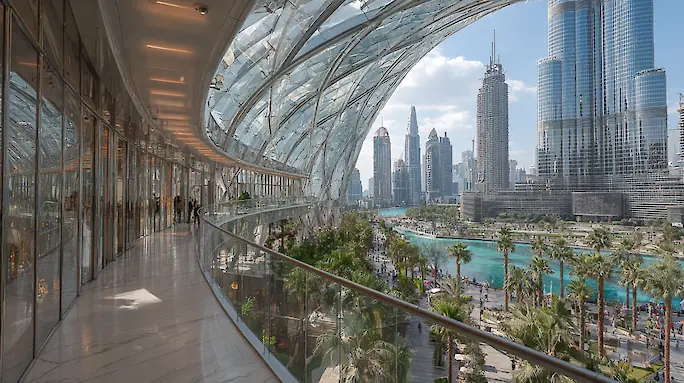
- Fountain shows: Every evening from 6:00 p.m., a magical spectacle unfolds at the base of the Burj Khalifa—a dance of giant fountains set to music. The best views are from the bridge leading to Souk Al Bahar or from the waterfront promenade.
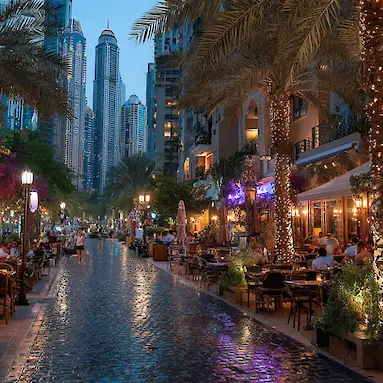
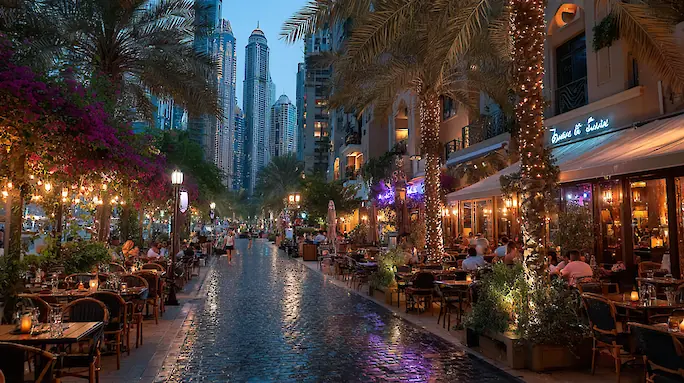
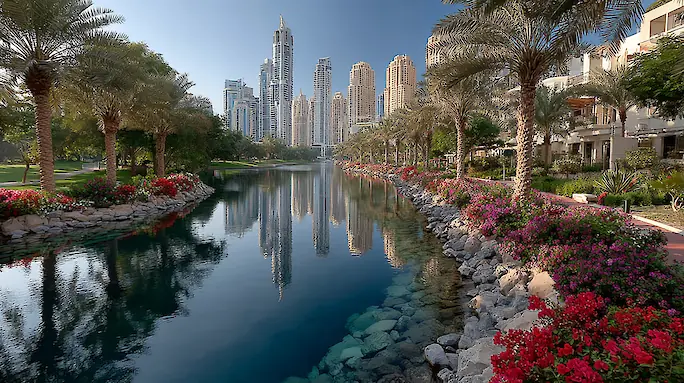
- Stunning walks: Head to Dubai Marina in the evening when the lights of the towering skyscrapers come on and reflect on the water of the canal—this is the city’s best free light show. Want to feel like you’re at an upscale resort? Take a stroll along JBR Walk, where the roar of Ferrari engines mingles with the aroma of shisha. For a complete contrast, dive into the labyrinthine streets of the Al Seef district on the shores of the Creek, where modern boutiques are tucked away in old-style buildings, and traditional wooden abra boats glide past.
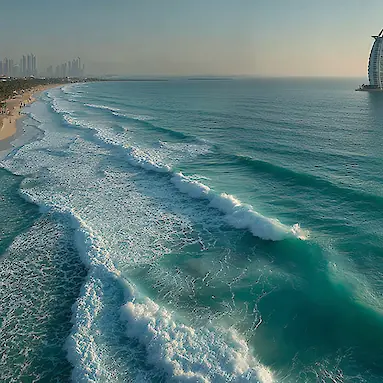
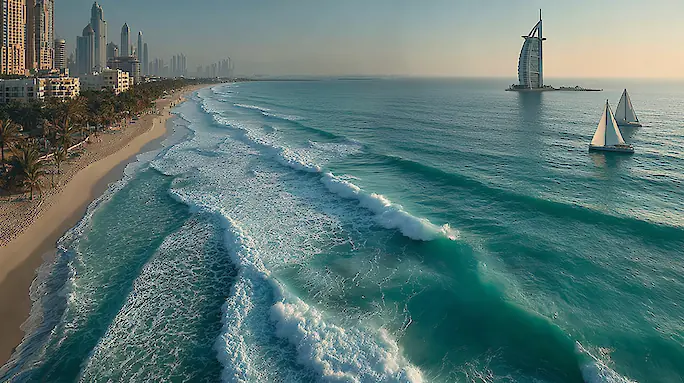
- Beaches: Dubai boasts magnificent public beaches with free admission and all the necessary infrastructure. Relax at JBR Beach or head to Kite Beach to snap iconic photos against the backdrop of the famous sail-shaped Burj Al Arab hotel.
Gastronomic traps and treasures: how to eat well and affordably in Dubai
In stark contrast to restaurants in tourist hotspots, where average bills can come as an unpleasant surprise, Dubai offers plenty of opportunities to enjoy delicious, authentic, and very affordable food.
Local insiders’ secret spots: cafeterias and food courts
Dubai’s true gastronomic treasure lies in the unassuming “cafeterias” in the old districts of Deira and Bur Dubai. It’s here that you can savor a huge, juicy shawarma for just 5–10 AED or order a full meal, such as fragrant biryani, for 15–20 AED. Another great option for a quick and inexpensive lunch is the food courts in major shopping malls, which feature cuisines from around the world, with a hearty combo meal rarely costing more than 30–40 AED.
Fine dining at half price: the magic of the entertainer and ‘Happy Hours’
If you want to enjoy a fine dining experience without breaking the bank, download the The Entertainer app. Once you purchase a subscription, the app gives you access to thousands of “buy one, get one free” coupons on main courses. The mechanism is simple: you order two main courses, but only pay for the more expensive one. Many bars and pubs, especially in expat-favorite areas like Marina and JLT, offer “happy hours,” typically from 5:00 p.m. to 8:00 p.m., during which you can enjoy drinks at discounts of up to 50%.
Shopping without overpaying: From the art of bargaining at markets to VAT refunds
Dubai is a shopper’s paradise, but to keep your shopping trips from turning into a financial nightmare, you need to know a few simple rules.
The Eastern bazaar: how to bargain effectively at souks
Visiting traditional markets-such as the Gold Souk (gold market) or the Spice Souk (spice market)—is not just about shopping; it’s a cultural experience in itself. Bargaining is an integral part of the process here.
- The initial price quoted to tourists is always inflated. Feel free to start bargaining by offering a price that’s 50% lower than the asking price.
- Your goal should be a final discount of 20–30%.
- Master the “theatrical exit.” Be polite, smile, and stay firm in your stance. If the seller won’t budge, thank them, sigh with genuine regret, and slowly (!) start to walk away. In nine out of ten cases, you’ll be stopped by a shout: “Okay, okay, my friend, for you special price!” This is your moment of triumph.
Brand hunting: a guide to outlets
For brand-name items with genuine discounts, head to Dubai Outlet Mall. Here, you can find products from Calvin Klein, Tommy Hilfiger, Nike, and hundreds of other brands year-round, with discounts ranging from 30% to 70%. However, keep in mind that the mall is located away from the city center, and a taxi ride will take time and money. It’s worth the effort if you’re set on a focused and large-scale shopping spree.
Tax free: getting your money back at the airport
Tourists in the UAE are entitled to a VAT refund on their purchases. The process is straightforward if you follow the instructions.
1. In the store: After making a purchase totaling at least 250 AED on a single receipt, ask the salesperson to issue you a Tax Free check. You’ll need your passport for this.
2. At the airport (before checking in for your flight): Go to a Planet Payment operator kiosk. Scan your passport, boarding pass, and receipts. Be prepared to present your purchases in unopened packaging.
3. Receiving your refund: After passing through passport control, locate the Planet refund counter and receive your refund in cash or to your bank card.
VAT Refund Tip: To minimize fees, try to combine your purchases into a single receipt totaling at least 250 AED and choose to receive your refund to a bank card rather than in cash. This way, you’ll save on processing fees for each receipt.
Dubai isn’t expensive if you know the secrets
Dubai is a city that generously rewards well-prepared travelers. Most “tourist traps” aren’t about outright deception-they’re simply a fee for being uninformed. As our guide shows, avoiding unnecessary expenses and getting the most out of your trip is actually quite easy. Remember these three golden rules for smart travelers in Dubai:
- Book everything in advance online. From airline tickets to museum admissions, this can save you up to 25% of your budget and guarantee access.
- Use a Nol Card for transportation and always pay in AED. These two simple steps will save you from dozens of small but annoying extra charges.
- Don’t be afraid to stray off the beaten tourist path. The tastiest food and the most authentic experiences often await you in places where the crowds of tourists aren’t present.
Now you have all the tools you need. Explore Dubai with confidence, spend your money wisely, and bring home not just souvenirs and a tan, but also the satisfying feeling that you outsmarted the system. Happy hunting for unforgettable experiences in the city of the future!













Comments