
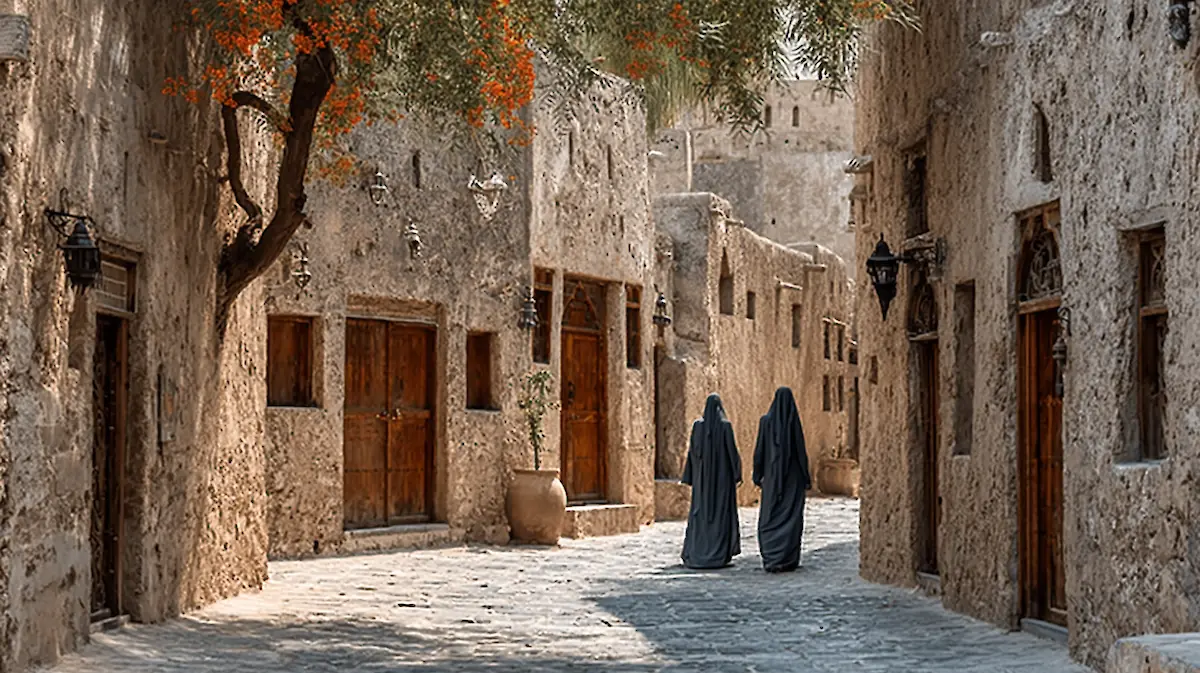
Let’s delve into hidden ingredients, cultural codes, and laws to ensure your trip goes smoothly. What do the most delicate tiramisu in a restaurant overlooking Burj Khalifa, the dress code rules at Dubai Mall, and even the contents of your first-aid kit at the border have in common? The answer is one: the pervasive principle of “halal.” In Dubai, this Arabic word meaning “permitted” has long since gone beyond the kitchen. It’s not just a set of rules—it’s an entire philosophy that shapes the rhythm of life in the emirate, from the ingredients in the dessert on your plate to the nuances of local legislation.
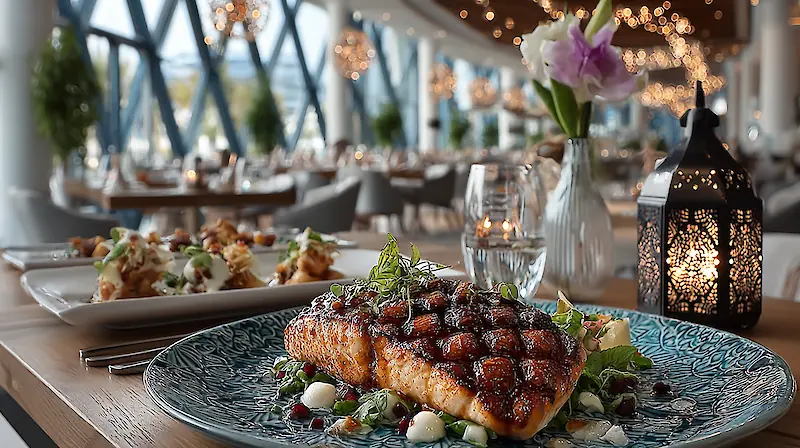
This article is your comprehensive guide to the world of “permitted” in Dubai. We’ll start with the most mouthwatering details-exploring what’s really hiding in sauces, desserts, and gelatin. Then we’ll walk you through every aspect of local etiquette and laws, ensuring your journey is not only comfortable and safe but also truly mindful.
What Is “Halal” on your plate: A closer look at Dubai’s cuisine
Dubai’s gastronomic scene dazzles with a kaleidoscope of flavors, but behind this vibrant facade lies a quality-control system that many countries would envy. Here, “halal” is not just a nod to tradition—it’s a stringent state standard. For you as a guest, this means one thing: absolute peace of mind and confidence in what’s on your plate.
More than just “no pork”: government oversight and certification
While halal certification is voluntary in many countries, in the UAE it is a centralized and mandatory system. Two key organizations stand behind it: ESMA (the Emirates Authority for Standardization and Metrology), which develops national standards, and the Dubai Municipality, whose inspectors rigorously monitor compliance in every restaurant and production facility. The main indicator for you as a tourist is the UAE National Halal Mark on the packaging or in the menu. Its presence is a sign of impeccable quality and compliance with all regulations.
A government guarantee: In the UAE, halal certification is mandatory and regulated by the government. This means you can be confident that all standards are strictly adhered to in any certified establishment.
Hidden ingredients on the menu: sauces, desserts, and mysterious gelatin
The most interesting part for foodies begins where the obvious prohibitions end. Let’s take a closer look at the ingredients in popular dishes.
- Sauces: Worried that a sophisticated sauce served with steak might contain wine or wine vinegar? You can breathe easy. Local chefs skillfully replace these with permissible alternatives, such as vinegar made from dates or apples, achieving the same depth of flavor without violating the rules.
- Desserts: Dreaming of that perfect, airy tiramisu but worried about the alcoholic soak? Dubai’s pastry chefs are true magicians, creating alcohol-free versions of global favorites that are just as delicious as the originals. The same goes for vanilla extract—here, it’s always alcohol-free.
- Gelatin: This ingredient often raises questions. In Dubai, you can rest assured: pork gelatin is strictly prohibited. Desserts, jellies, and mousses use only gelatin derived from beef (in accordance with Islamic slaughtering standards), fish, or plant-based sources such as agar-agar and pectin.

Your menu navigator: how to easily find your way and what to ask
To make navigating any menu easy and enjoyable for you, here are three simple tips from us:
- Trust the signs. See the National Halal Mark on the menu or packaging? That’s a green light and your main guarantee.
- Ask confidently. The staff here is accustomed to such questions and is well-trained. A polite inquiry about the origin of the gelatin or the composition of a sauce is perfectly acceptable.
- Read the labeling. In those rare establishments (usually at hotels) that offer a “non-halal” menu, it will always be clearly marked and prepared in a separate kitchen, minimizing any risk of cross-contamination.
The rules of “What’s Permitted”: Dubai’s cultural code you need to know
But “halal” isn’t just about what’s on your plate, it’s also about how you behave outside of it. Respecting local traditions in Dubai is your magic key: it transforms you from an ordinary tourist into an honored guest, opening doors to a genuine, unvarnished emirate brimming with sincere hospitality.
Respect in the details: dress code, photography, and the sacred month of Ramadan
Observing these simple rules will make your stay comfortable and enjoyable.
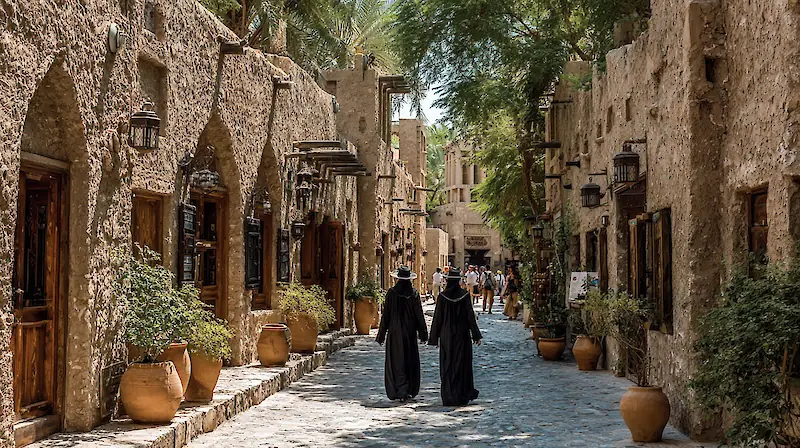
- Clothing: In public places, shopping malls, markets, government offices, stick to modest attire. A simple rule of “shoulders and knees covered” is a universal solution. On hotel premises and beaches, the dress code is, of course, more relaxed.
- Mosques: To visit a mosque, such as the famous Jumeirah Mosque, which is open to non-Muslims, you’ll need fully covering clothing. Women are also required to cover their heads. Don’t worry if you don’t have suitable attire with you—you can usually obtain a special garment (an abaya) free of charge at the entrance.
- The Sacred Month of Ramadan: If your trip coincides with this special time, you have a unique opportunity to see another side of life in the emirate. During the day, Muslims observe a strict fast. As a guest, you can show solidarity and respect by simply refraining from eating, drinking, or smoking in public during daylight hours. This simple gesture will be highly appreciated by the local residents. Restaurants catering to tourists continue to operate, but their dining areas are discreetly hidden behind screens.
- Photography: The main rule is never to photograph local residents, especially women, without their direct and explicit permission. Photographing government buildings and military facilities is also strictly prohibited.
Red lines: alcohol, personal relationships, and drug laws
There are several topics where UAE legislation is uncompromising. You need to be aware of these to avoid serious trouble.
- Alcohol: Tourists over 21 can consume alcohol, but only in licensed venues such as bars, restaurants, and hotel clubs. Being visibly intoxicated or drinking alcohol in public places like streets, beaches, or parks is a criminal offense.
- Personal relationships: Public displays of affection, such as kissing and hugging, are not accepted in Dubai and may result in a fine. Be discreet.
- Drugs and medications: The UAE has a policy of zero tolerance for drugs. Even the detection of microscopic amounts of prohibited substances can lead to lengthy prison sentences. This also applies to certain medications.
Zero tolerance is no joke!: The UAE’s laws regarding drugs and driving under the influence (0.0 blood alcohol level) are among the strictest in the world. Even the slightest violation can result in imprisonment. Do not take any risks under any circumstances.
Attention, first aid kit!: Are you packing a first aid kit? Give it your utmost attention! The import of certain medications, even those that are familiar to us (especially psychotropic drugs and strong painkillers), into the UAE is strictly regulated. To avoid major issues at customs, obtain an online permit from the UAE Ministry of Health and Prevention (MoHAP) for importing controlled substances in advance. For other prescription medications, you must have a doctor’s prescription on hand, along with a notarized English translation. Believe us, ten minutes spent preparing these documents at home can save your entire vacation.
Conclusion
So what was really hidden in that very tiramisu? As you can see, it wasn’t just the alcohol-free sponge cake, it represented an entire culture. Understanding the principles of “halal” is truly your ticket behind the scenes of tourist Dubai. It gives you the opportunity to stop being just an observer and become a welcome, understanding guest who is met with a genuine smile and true hospitality.
Ultimately, these rules are not about restrictions; they are about respect. They are the language through which you say “thank you” to the culture that has welcomed you. And when you speak this language, Dubai reveals itself to you from an entirely different perspective—not just as a city of luxury and records, but as a place with deep traditions and incredible hospitality. Have a pleasant and mindful journey!

















Comments