
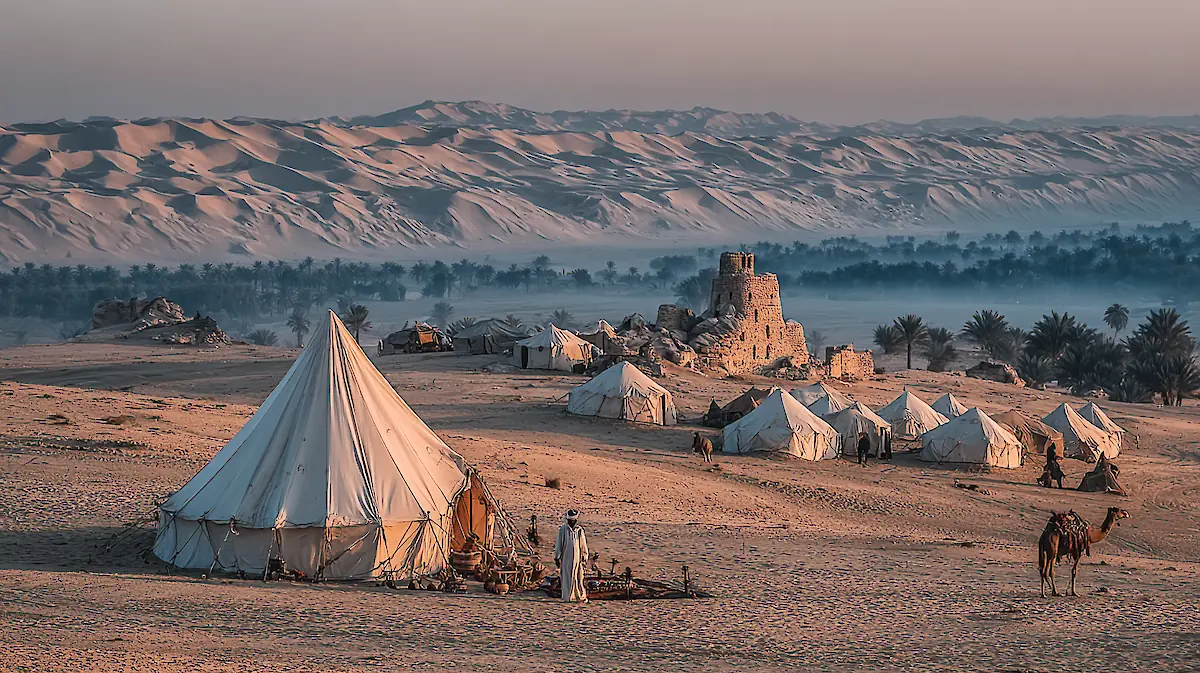
From falconry to mall etiquette—your guide to the invisible traditions that shape the emirate’s identity.
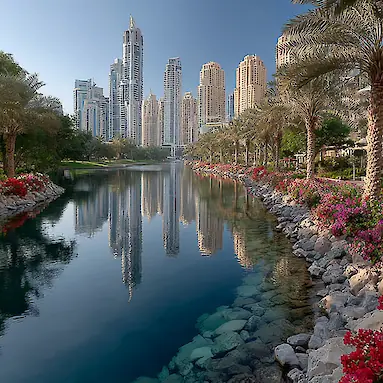
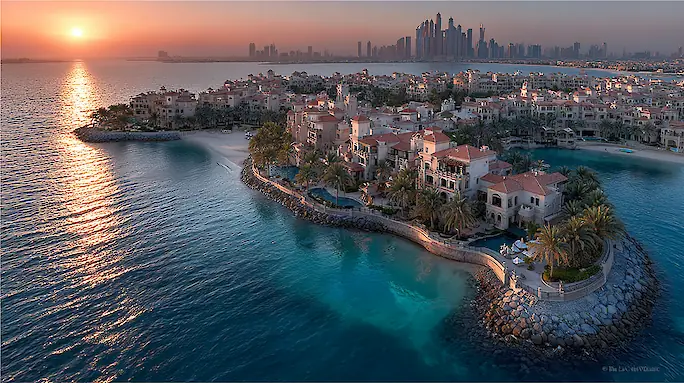
We see Dubai as a dazzling oasis of the future: vertiginous skyscrapers piercing the clouds, man-made palm-shaped islands, and a global hub of luxury. But where, behind this futuristic façade, can we find the emirate’s true soul, its cultural code? The answer lies not in the glitz of shopping malls, but in the golden silence of the desert, from which it all began. Don’t think of the Al Marmum Reserve merely as another stop on your safari itinerary. It’s the key to understanding how the most futuristic metropolis on the planet could emerge from the desert’s hushed stillness. This guide will teach you how to "read" Dubai, discovering echoes of ancient desert life embedded within the ultramodern urban landscape. It will help you transform from a tourist skimming the surface into a visitor who sees the city right through to its core.
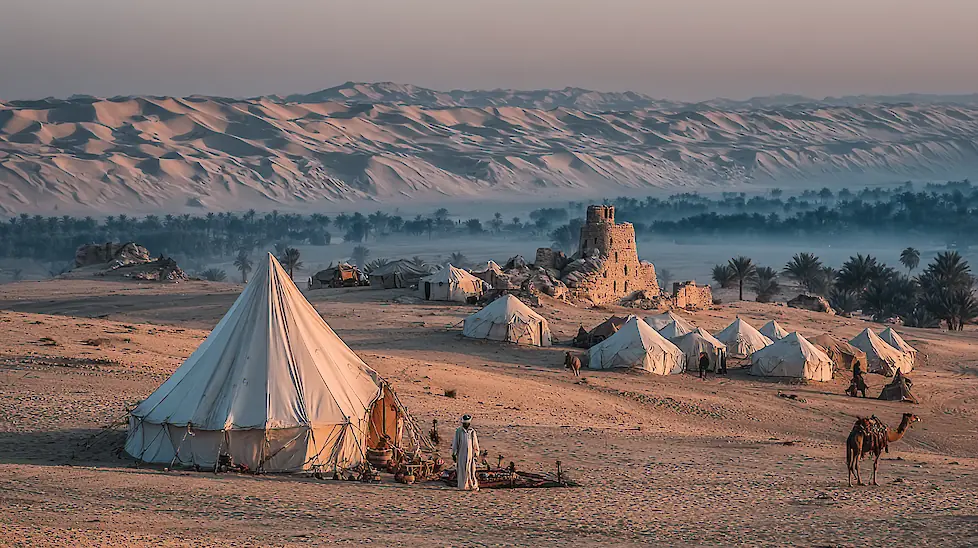
Al Marmum—A living source of Dubai’s cultural code
The first thing you need to understand about Al Marmum: it’s not an attraction, but a living organism. A visit here is like stepping into an open-air museum, where age-old traditions are not merely preserved, but continue to thrive. It is here, observing authentic practices, that one can grasp the very foundations upon which modern Dubai society is built.
Falconry: more than a show, a symbol of status and a UNESCO heritage
What you’ll witness in Al Marmoum is not mere entertainment, but a demonstration of an elite art form recognized by UNESCO as an intangible cultural heritage of humanity. The silence of endless dunes. A swift movement—and the falconer removes the leather hood from the falcon’s head. The mighty bird silently soars into the sky. This spectacle, brimming with grace and speed, showcases not hunting, but a profound, almost mystical bond between human and bird. This highly professional display preserves an ancient craft that, in Emirati culture, symbolizes prestige, patience, and keen intellect.

Camels—“Ships of the Desert” and stars of racing tracks
For the Bedouin, the camel was everything: transport, a source of food, and wool. Today, its role has evolved, yet it has not lost its significance. Now, it’s a national treasure and a star of competitive sports. Attending camel races at Al Marmoum Racecourse immerses you in an atmosphere of genuine excitement. This is a truly national sport for local residents, not a tourist spectacle, imbued with a spirit of competition and pride.
Traditions in the 21st century: Note the jockeys—they’re high-tech robots! They are operated from off-road vehicles traveling parallel to the track. This is a striking example of how the Emirates carefully adapt ancient traditions to modern ethical standards, while preserving the spirit of competition.
Sadu weaving: how to read the "texts" of the Desert in bedouin patterns
Traditional Bedouin crafts are a brilliant manifestation of ingenuity under conditions of limited resources. Take Sadu, for instance—a dense fabric made from camel wool featuring vibrant geometric patterns. This is not merely ornamentation; it’s a coded language of the desert. Red, black, and white threads combine to form symbols of dunes, stars, and tribal emblems, telling entire stories. To find authentic handmade items rather than mass-produced souvenirs, visit heritage festivals and specialized cultural centers.
The ideal time to visit: seasons and festivals
To fully enjoy exploring the desert, plan your trip for the cooler months—from November to March. It is during this period that the main event takes place—the annual Al Marmoom Heritage Festival. This is a unique opportunity to experience falconry, camel racing, traditional crafts, and other facets of Bedouin culture all in one place, in the most vibrant and authentic atmosphere.
The desert code in the metropolis: How bedouin heritage shapes modern Dubai
The most surprising discovery awaits you upon returning to the city. You’ll suddenly begin to notice how the invisible laws of the desert subtly emerge through the chrome and glass of the metropolis. Take, for instance, the ritual of serving aromatic Arabic coffee qahwa with dates in a luxurious lobby—isn’t this the very same code of unconditional hospitality as in a Bedouin tent? And when you see huge families strolling together through malls, from infants to the elderly, you realize: this is an echo of those strong tribal bonds that were the key to survival in the desert sands. Even the city’s rhythm itself, punctuated by the five daily calls to prayer, resonates with the same ancient tuning fork that once dictated the daily routine of a caravan. And the restrained dignity in social interactions, the profound respect for elders—these are nothing but the urban incarnation of the concept of “saving face,” which is absolutely essential for harmony within a small tribe.
Practical etiquette: how to become an informed guest
Understanding these deep-rooted connections transforms following local customs from a mere obligation into a meaningful act of respect.
More than just clothing: a gesture of respect
The overarching principle is modesty, especially outside beachfront hotels. In shopping malls and on the streets, men should avoid sleeveless t-shirts, while women should refrain from wearing clothing that exposes their shoulders or knees. When visiting a mosque, attire must be as modest as possible, and women are required to cover their heads.
Ramadan: not “Prohibitions,” but a unique rhythm of life
A visit during the holy month of Ramadan will offer a truly unique experience. During the day, the city falls silent, but as the sun sets, it comes alive with the festive atmosphere of iftar dinners, often attended by tourists as well. Show respect: refrain from eating, drinking, and smoking in public places during daylight hours.
Body language: what Dubai keeps silent about
- Greetings: Learn these universal phrases: “As-salamu alaykum” (Hello) and “Shukran” (Thank you).
- Handshake: A man should not extend his hand first to a woman wearing traditional attire. Wait for her initiative, or simply offer a polite nod. This is a sign of respect for her personal space.
- Body Language: Never point the soles of your shoes toward your interlocutor—this is considered offensive. Do not use your left hand for eating, greeting, or handing over objects, as it is traditionally considered "unclean."
Photography rules — respecting privacy
The prohibition on photographing local residents, especially women, without their explicit consent is a direct legacy of the Bedouin concept of protecting family honor and privacy. Treat this with the utmost seriousness.
Attention: photographing people is serious business!: UAE law strictly protects privacy. Publishing a person's photo without their consent can result in hefty fines and even deportation. Always ask for permission, and a smile in response to refusal is the best way out of the situation.
Gastronomic code: Flavors and aromas of Arabia
Imagine the aroma of freshly brewed coffee with cardamom and the sweet-smoky scent of bakhur drifting through a Bedouin tent. These aromas are the key to understanding a gastronomic culture that originated out of sheer necessity for survival, yet evolved into an art of hospitality.
What to try: signature dishes of Emirati cuisine
At the heart of Emirati cuisine lies the ingenious simplicity of Bedouin life. Imagine lamb slowly braised until it effortlessly falls apart into tender strands, rice infused with the fragrant notes of cardamom, cinnamon, and dried lime, and a generous scattering of nuts. This is food not designed to dazzle with complexity, but rather to warm, nourish, and bring people together.
Be sure to sample:
- Al Machboos: Spiced rice cooked with tender lamb or chicken and distinctive spices, including dried lime lumi. A quintessential local dish, beloved for bringing families together around the table.
- Al Harees: A delicately smooth wheat porridge that simmers for hours with meat until it achieves a creamy, velvety texture. A traditional dish for festive occasions, embodying warmth and care.
- Luqaimat: Light-as-air fried dough balls, generously drizzled with date syrup and sprinkled with sesame seeds. The perfect dessert to accompany Arabic coffee—crispy on the outside, meltingly soft on the inside.
For an authentic taste experience, head to Al Fanar Restaurant & Café, where the ambiance of 1960s Dubai has been faithfully recreated, or to Al Khayma Heritage Restaurant for a dinner in a traditional tent under the stars, fully immersing yourself in Bedouin culture.
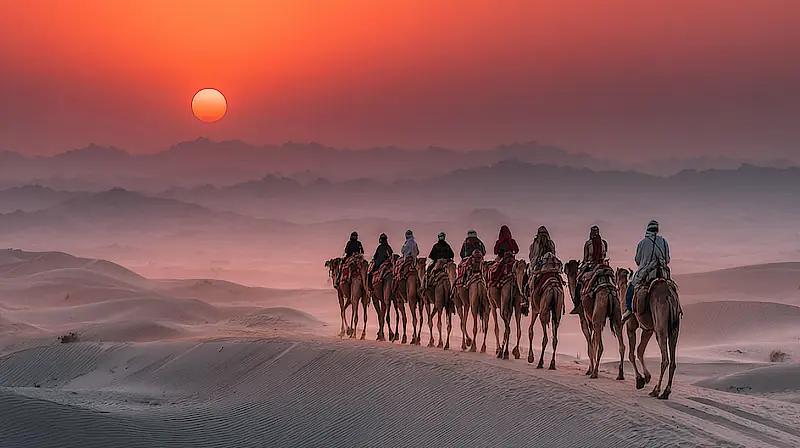
The olfactory code of Dubai: scents of Oud and Bukhoor
In Arab culture, fragrances are not merely perfumes—they are a language of communication. The deep, woody-smoky aroma of oud (the precious oil extracted from agarwood) signifies status and luxury. The aromatic smoke of bukhoor (wood chips infused with oils), used to fumigate homes and clothing, is a symbol of hospitality. To immerse yourself in this world, visit the Spice and Perfume Market in the historic Deira district or explore boutiques of local brands in major shopping malls.
From tourist to guest: How Al Marmoom is transforming your perspective on Dubai
Dubai is a city where the past is not buried beneath glass and concrete, but woven into the very fabric of modern life. Visiting the Al Marmoom Reserve is not just an excursion—it’s gaining a key to understanding this complex and profound culture. Instead of memorizing dozens of rules, simply ask yourself one question in any situation, from a business meeting to a trip to the mall: “How would this tradition look in the desert?” This simple mental experiment will reveal a completely different city, hidden behind the gleam of its facades.
And then you’ll realize that Dubai’s tallest building is actually invisible. It’s its cultural code, rooted in the sands as deeply as the skyscrapers are rooted in the sky. And now you hold the key to its main entrance.









Comments