
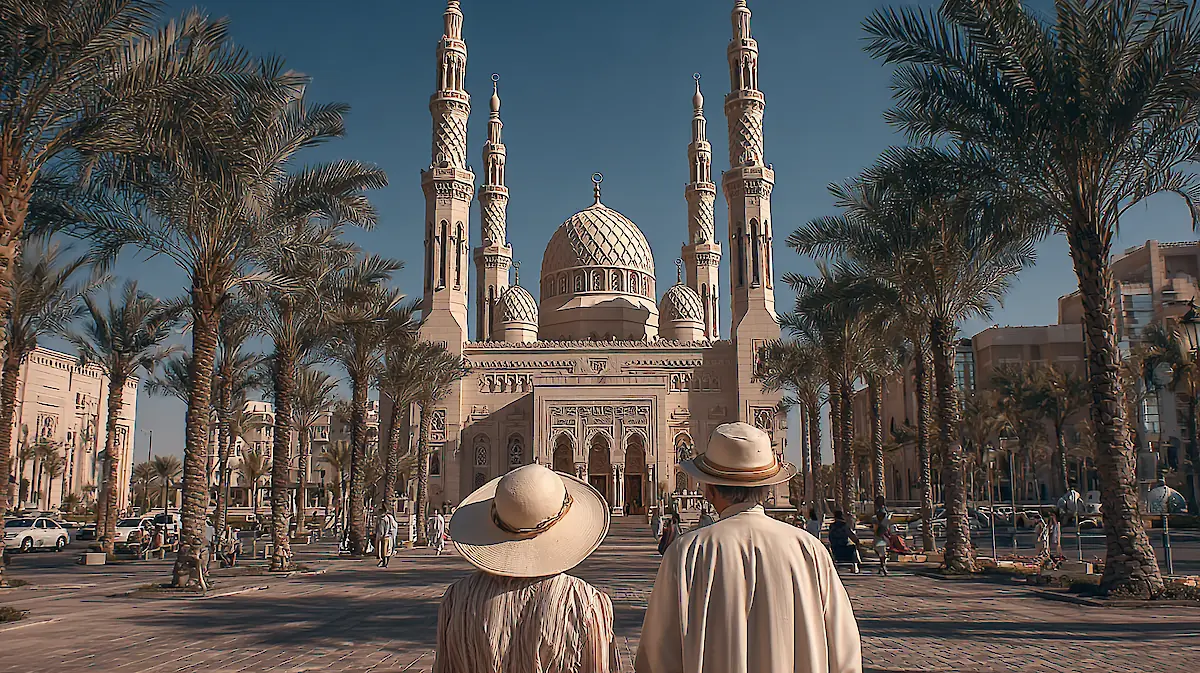
From dress codes in malls to photography rules and behavior during Ramadan-everything you need to know before visiting the most technologically advanced city in the East.
Dubai is a city with a double nature. On one hand, there’s the glitz of skyscrapers and absolute freedom of consumption. On the other, there are strict rules whose ignorance can turn a vacation into a hassle. This guide is your safety net against trouble and the key to the very freedom that comes with confidence. Let’s figure out how to get the most out of Dubai without breaking a single law, even by accident.

Pre-departure checklist: Passport, first-aid kit, insurance
The perfect trip to Dubai starts even before you fly out. Just three items on your checklist-passport, first-aid kit, and insurance, will protect you from 99% of potential issues at the border and ensure a peaceful stay. Let’s go through them together.
Visa and passport: double-checking your documents
The UAE’s visa policy is fairly lenient but requires attention to detail. Citizens of Russia, Ukraine, and Belarus enjoy a visa-free regime that allows them to stay in the country for up to 90 days. Travelers from Kazakhstan and Azerbaijan receive a free visa on arrival valid for 30 days. Citizens of other countries, such as Uzbekistan and Kyrgyzstan, must obtain an e-visa in advance. The main rule for everyone without exception: your foreign passport must be valid for at least 6 months from the date of entry into the UAE. Make sure of this in advance.
What to bring with you: customs regulations and a first-aid kit
In Dubai, you can import up to 4 liters of strong alcohol, up to 400 cigarettes, and cash up to 60,000 dirhams duty-free without declaration. However, your primary focus should be on your personal first-aid kit.
Is your first-aid kit at risk?: Many medications familiar to us, especially painkillers and sedatives containing codeine or phenobarbital (such as “Pentalgin” or “Corvalol”), are classified as narcotics in the UAE. Before your trip, be sure to check the composition of your medications and, if necessary, obtain an import permit online through the MoHAP portal. This will save you from major problems at customs.
Medical insurance: is it necessary or not?
Don’t rely on luck: medical insurance in Dubai is not a formality but your financial safety net. It may not be checked at the border, but without insurance, you can face a huge bill at the clinic. A standard doctor’s consultation can cost between 400–800 AED, and a day in a hospital can range from 1,500 to 5,000 AED. An insurance policy is your financial safeguard in unforeseen circumstances.
Key rules of conduct: Everyday etiquette
In Dubai, it’s easy to blend in if you keep one key rule in mind: respect for local culture is valued above all else. It’s not complicated, and we’ll go over several key points that will help you feel confident—from choosing the right clothing to following photography guidelines.
The art of dressing: how to find the balance between style and respect
How should you dress in Dubai? Remember a simple rule for all public places (malls, streets, and public transport): shoulders and knees must be covered. This is enough to feel comfortable and avoid offending anyone.
- In the mall: T-shirts, long skirts, and trousers are suitable.
- At the beach: Standard swimsuits and bikinis are perfectly acceptable, but outside the beach area, you must wear additional clothing.
- In the mosque: Fully covered clothing and a headscarf are required for women (usually, everything you need is provided at the entrance).

Pro tip for fashionistas: Always carry a lightweight shawl or cardigan with you. It won’t take up much space in your bag, but it will come in handy if you spontaneously decide to visit a mall or a more conservative area after a stroll along the waterfront.
Displaying affection in public: where is the line? How should you behave in public?
Be more reserved when expressing affection. Holding hands is perfectly acceptable for married couples, but passionate kisses and hugs are best saved for your hotel. Such behavior could be considered indecent. It is also advisable to avoid loud conversations, shouting, and the use of profanity in public places—as this may be regarded as a breach of public order.
Capturing respect: rules for photo and video shooting
Respect for privacy is a fundamental principle in the UAE. It is strictly forbidden to photograph or video people without their prior consent, especially local women. Filming government buildings, military installations, and sheikhs' palaces is also prohibited. When photographing landmarks, try to ensure that no strangers appear in close-up shots.
Photos on social media: what does the law say?: Remember that publishing photos of people online without their consent may be considered a cybercrime in Dubai. Before posting a nice photo with a stranger, make sure they do not object.
A special time: how to behave during Ramadan
Are you in Dubai during the holy month of Ramadan? Consider yourself lucky. This is a unique opportunity to see the emirate from a completely different, cultural perspective—but to take full advantage of it, you need to follow several important rules. The main rule: from sunrise to sunset, eating, drinking (even water), and smoking are prohibited in public places. Hotels and some shopping malls provide special enclosed areas for this purpose. During this period, it is even more important to dress modestly and avoid noisy behavior.
Evening Ramadan: Although strict rules apply during the day, the evenings during Ramadan are magical. Visit one of the many tents for iftar (the evening meal to break the fast) to experience Arab hospitality and traditional cuisine.
Red lines: What you absolutely must not do in Dubai
Now for the things you should never joke about in Dubai. Memorize these rules like the Lord's Prayer, because here ignorance of the law not only does not exempt you from responsibility, but guarantees you major problems.
Alcohol: available, but strictly controlled
Alcohol is available to tourists over 21 in Dubai, but its circulation is strictly regulated.
- Where to buy?: In specialized stores (MMI, African + Eastern), by obtaining a free 30-day tourist license on-site using your passport.
- Where to drink?: Exclusively in licensed establishments (bars, restaurants, hotel clubs) or in your hotel room/private residence.
- What to avoid?: It is strictly forbidden to consume alcohol and be visibly intoxicated in public places, including streets, parks, and beaches. A zero-tolerance policy applies behind the wheel (0.0 per mille) – violations are punishable by imprisonment and deportation.
Drugs: no chances or excuses
The issue of drugs in the UAE is closed once and for all. The laws here are not just strict—they feature absolute, total zero tolerance for the possession, use, or transportation of any prohibited substances.
Attention: absolute prohibition!: The UAE's laws regarding drugs are among the strictest in the world. 'I didn't know' or 'they planted it on me' will not work. Even microscopic traces of prohibited substances found in your belongings or tests can lead to lengthy prison sentences. The risk is absolutely unjustified.
Personal relationships: what couples need to know
Thanks to recent legislative changes, unmarried couples can stay in the same hotel room without any issues. However, same-sex relationships remain illegal in the UAE. While authorities generally do not interfere in tourists' private lives, any public displays of such relationships are unacceptable and may result in serious legal consequences.
Digital etiquette: exercise caution online and in messaging apps
The digital space in Dubai is considered an extension of the public sphere and is subject to the same laws. Posting insults, slander, or unverified rumors on social media and messaging apps constitutes a serious cybercrime. Using VPN services is not prohibited per se, but using them to access illegal content or engage in unlawful activities is punishable by law.
Everyday details: Money, transportation, and communication
Being aware of everyday nuances will make your stay in Dubai even more comfortable.
Finances: tipping, bargaining, and tax refunds
The official currency is the UAE dirham (AED).
- Tipping: Not mandatory, but appreciated. In restaurants where a service charge is already included in the bill, additional tips are at your discretion. In other cases, 10–15% is appropriate. You can leave 5–10 AED for a porter or hotel maid, and round up the fare slightly for a taxi driver.
- Bargaining: Bargaining is appropriate and even expected in traditional markets (souks). Here, you can confidently reduce the price by 30–50%. Prices in shopping malls and boutiques are fixed.
- Tax Free: Tourists can reclaim 5% VAT on purchases totaling at least 250 AED. Ask the store to issue a Tax Free receipt and complete the validation procedure at the airport before departure.
On the go: how to use Dubai’s transport
Dubai’s public transport is convenient and modern. A single NOL card is used for payment. When using Dubai’s famous metro, keep a few nuances in mind. First, forget about snacks or even a bottle of water—eating, drinking, or chewing gum in the metro is subject to a fine. Second, pay attention to the markings on the platform: the first carriages of the trains are the “pink zone,” reserved for women and children only. If you are a man and happen to be in that zone, a fine of 500 AED will be imposed without delay. To rent a car, tourists from Russia and most CIS countries need both a national and an international driver’s license.
Stay connected: SIM cards, Wi-Fi, and VPN
Free Wi-Fi is available at the airport, in shopping malls, and in most hotels. For constant internet access, it is convenient to purchase a tourist SIM card from Etisalat or Du directly at the airport upon arrival.
Just in case: Safety and emergency services
Dubai is one of the safest cities in the world. The key is knowing how to act in an unexpected situation. Save these numbers:
- Police: 999
- Ambulance: 998
- Fire Department: 997
How to behave when interacting with the police:
- Remain completely calm and polite.
- Present your documents upon first request.
- Do not argue or raise your voice.
- Under no circumstances offer a bribe—it is a serious crime.
- In case of detention, demand contact with your country’s consulate.
Dubai awaits you!
As you can see, Dubai’s rules are not a cage but rather clear “traffic rules” in a large and welcoming city. By following them, you do not restrict yourself; instead, you open all doors, gaining safety, comfort, and genuine respect in return. You are now ready for this.
Checklist for a polite tourist:
- Check your first-aid kit for substances banned in the UAE before you depart.
- Dress modestly in public places (shoulders and knees covered).
- Maintain zero tolerance for drinking and driving.
- Always ask for permission before photographing people.
- In case of legal issues, contact your consulate immediately.
Travel smartly and enjoy your trip!




















Comments