
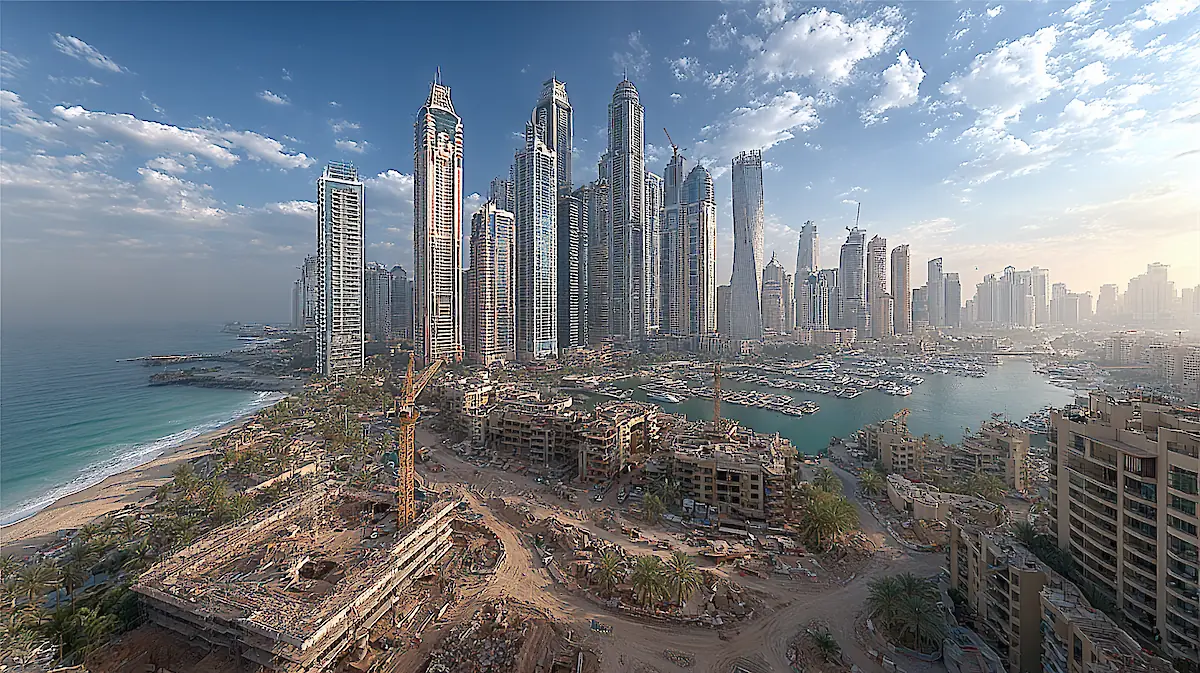
Dubai’s real estate market is often sold as a simple formula: buy an apartment and you get income, sunshine, and a visa. In reality, it’s more complicated. Yes, a foreigner can legally purchase property here without a local partner, without excessive approvals, and without income tax. But that doesn’t make the market “easy.” It makes it highly formalized. And if you don’t understand the rules, the system won’t protect you — it will simply and quietly record your mistake in the contract.
This article explains how the purchase process actually works, where people lose money in practice, and what you need to understand before opening a developer’s website or messaging an agent on WhatsApp.
What foreigners are actually allowed to buy
There is no ban on foreigners purchasing property in Dubai. However, there is a strict territorial limitation: full ownership is only permitted in freehold zones — areas where the law allows outright ownership.
These include:
-
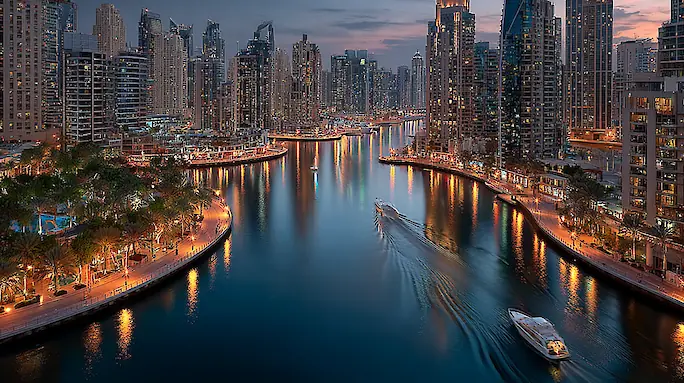
Dubai Marina
-
Downtown Dubai
-
Business Bay
-
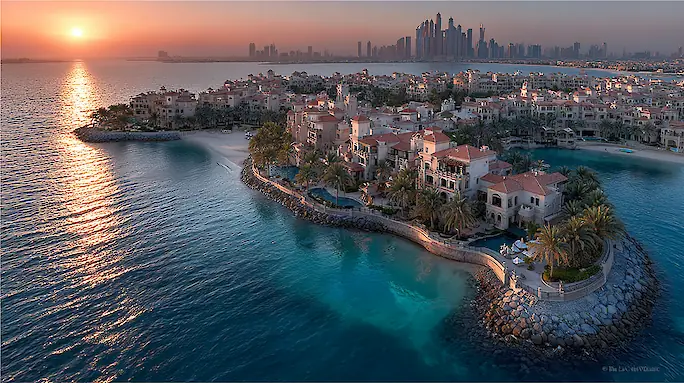
Palm Jumeirah
-
Jumeirah Village Circle (JVC)
-
Dubai Hills Estate
In freehold areas, you receive full ownership, not a 99-year lease, not a share, and not a “right of use.” The property is registered with the Dubai Land Department, the only authority that legally confirms that a property exists and belongs to you.
If a property is not recorded in the DLD registry, it effectively does not exist. Attractive contracts, a well-known developer’s logo, or a confident agent’s tone do not change that.
Why you are buying: The key question most people ignore
It sounds obvious, almost too basic to take seriously. And that’s exactly why so many mistakes start here. Ask a buyer why they’re purchasing property in Dubai, and you’ll often hear vague answers: “for living and for renting,” “we’ll decide later,” “it should stay liquid anyway.” In this market, those phrases don’t help. They blur the decision instead of clarifying it.
Dubai doesn’t reward indecision. The criteria for a comfortable place to live and the criteria for a strong rental asset are often not just different, they directly contradict each other.
If you’re buying to live in the property yourself, everyday details matter far more than glossy selling points. Shade can be more valuable than a panoramic sea view. Infrastructure — supermarkets, pharmacies, schools, walkable streets — quickly outweighs the prestige of a developer’s name. Noise levels, neighboring buildings, and even the demographic profile of residents become relevant after the excitement of the purchase fades. And perhaps most underestimated of all: the quality of the property management company. A poorly managed building can turn even an expensive apartment into a daily frustration.
When the goal is rental income, the logic shifts completely. The future tenant matters more than your personal taste. A tourist renting short-term cares about proximity to attractions and transport. A long-term resident looks for commute time, parking, and practical layouts. Floor plans that feel “cozy” for living can be hard to rent, while simple, efficient layouts tend to perform better. And most importantly, real yield — after service charges, vacancy, and maintenance — often looks very different from the numbers shown in presentations.
Buying with resale in mind adds another layer. Here, timing matters as much as location. The stage of the project, the developer’s reputation, and the volume of similar units hitting the market at the same time all affect exit price. Two apartments with the same square footage can behave very differently when it’s time to sell, simply because one sits in an oversupplied segment or comes from a less trusted developer.
This is where many buyers are caught off guard: the same property can be a strong rental asset and a poor place to live — or the opposite. A quiet, low-density building ideal for everyday life may attract little interest from tenants. A unit that rents effortlessly to tourists may feel uncomfortable for long-term living.
There are no “universal” apartments in Dubai. There are only properties that make sense for a specific purpose — and properties bought with blurred expectations that later feel like a compromise.
Off-plan or ready property
Ready property (secondary market)
Pros:
-
you see the actual building, not a promise
-
immediate rental potential
-
real service charges are known
Cons:
-
higher entry price
-
fewer installment options
Off-plan projects
Pros:
-
lower purchase price
-
developer payment plans
-
potential price growth by completion
Cons:
-
2–4 years waiting period
-
capital is locked
-
risk of delays
Off-plan property in Dubai is not a gamble — but only if:
-
the developer is officially registered
-
the project is tied to an escrow account
-
all payments are made through official channels
Payments “to the company,” “via a simplified structure,” or “through a partner” are not optimization — they are risk.
Developer reputation: Why the name matters more than the render
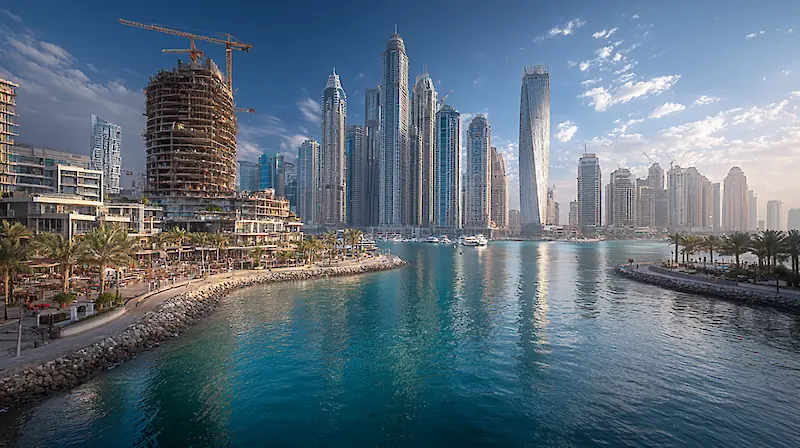
In Dubai, a developer’s name is a matter of liquidity and predictability. Two properties with the same size, layout, and even located in the same neighborhood can perform very differently on the market if they are built by different companies. In resale, the price gap in such cases often reaches tens of percent and it has little to do with the view from the window and everything to do with reputation.
The issue is that most buyers never encounter the developer in real life, only in a showroom. And a showroom is a carefully constructed stage set. Perfect lighting, polished scale models, presentations filled with the right words and glossy renders of a future lifestyle. It creates a sense of reliability, but says almost nothing about how the developer performs over time.
A real assessment starts with track record. How many projects the company has actually delivered, how often deadlines were pushed back, and what those buildings look like a few years after handover. In Dubai, this matters more than in many other markets: a building can look flawless in its early years, but three to five years later it becomes clear whether quality was built into the structure or only into the marketing.
Another factor that is often underestimated is post-handover property management. The management company determines whether the building maintains its appearance, whether common areas stay in order, and whether service charges remain reasonable. Poor management quickly erodes the value of even an expensive property, while a well-run building stays attractive to both tenants and future buyers for much longer.
That is why in Dubai developers are judged not by renders or promises, but by history. Anyone can produce a beautiful image. Far fewer can consistently deliver projects, maintain quality, and preserve the long-term liquidity of their properties.
Reservation and deposit
Once a property is selected, a Reservation Form is signed and a deposit is paid — typically 5–10%.
From that moment:
-
the unit is removed from the market
-
the price is locked
-
withdrawal without cause means losing the deposit
In Dubai, a deposit is not a gesture of intent. It is a legal commitment. “I changed my mind” or “this wasn’t explained to me” are not valid arguments.
SPA: Short, but strict
The SPA (Sale and Purchase Agreement) is the core transaction document. It is shorter than European contracts — which is precisely why it’s more dangerous if you don’t read carefully.
It defines:
-
payment schedule
-
penalties for delays
-
termination conditions
-
handover timelines
The contract is governed by UAE law. Messages in messengers have no legal standing.

The real cost of purchase: Beyond the listing price
In addition to the property price, the buyer pays:
-
4% of the price — DLD registration fee
-
approximately 2% — agent commission
-
administrative fees
-
mortgage-related bank fees (if applicable)
At the same time:
-
no purchase tax
-
no ownership tax
-
no rental income tax
However, there are service charges — annual fees for building maintenance. Their size depends on the area and project class and directly affects net yield.
Ownership registration and Title Deed
After full payment, the property is registered with the Dubai Land Department, and you receive a Title Deed — a digital ownership certificate.
From that point:
-
you are listed as the legal owner
-
you can sell, rent, or transfer the property
-
you are no longer dependent on the developer

Residency through property: Facts vs. marketing
Buying property may, but does not automatically, grant residency.
General benchmarks:
-
from AED 750,000 — 2-year residency visa
-
from AED 2,000,000 — 10-year Golden Visa
Buying a weak asset purely to obtain a visa often leads to frozen capital and difficult resale.
Where foreigners most often make mistakes
-
Buying a neighborhood instead of a specific building
-
Calculating yield “before” instead of “after” expenses
-
Trusting presentations instead of numbers
-
Confusing tourist appeal with investment value
-
Assuming the market always goes up
What you need to accept upfront
Dubai does not forgive lack of awareness. It is not aggressive or deceptive, it is indifferent. The system treats everyone the same. If you didn’t ask a question, that’s your issue. If you didn’t read a clause, that’s your responsibility.
But if you:
-
understand your objective
-
run the numbers
-
verify documents
Dubai becomes one of the most logical and transparent real estate markets in the world.












Comments